
You know that feeling when something's just... off?
Your team shows up on time. They complete their tasks. But there's no spark. No energy in meetings. No one's going the extra mile anymore. You've tried the usual fixes—engagement surveys, team lunches, maybe even a pizza party or two. And yet, you're still wondering: Is any of this actually making a difference?
Most HR leaders know engagement matters, but measuring it? That's where things get tricky. You need something to track whether your people are genuinely invested or just counting down to 5 PM. Enter the employee engagement index.
The Employee Engagement Index (EEI) isn't just another number on a dashboard. It's a tangible measure of how connected, motivated, and committed your workforce really is. And when you get it right, it tells you exactly where to focus on your energy.
Here's what we'll cover: how to measure your employee engagement index, what those numbers mean in the real world
What is the Employee Engagement Index (EEI)?
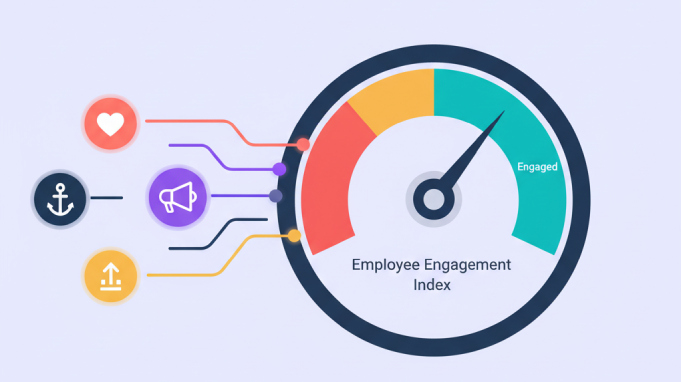
The employee engagement index is a metric that measures how emotionally and intellectually connected your employees are to their work, team, and organization.
Here's the key difference: it's not about satisfaction. A satisfied employee might be happy with their salary and benefits, but an engaged employee actually cares about the work itself. They're invested in outcomes, not just completing tasks.
The EEI captures three things:
- Enthusiasm – Do they care about what they're doing?
- Commitment – Are they aligned with company goals?
- Discretionary effort – Do they go beyond the bare minimum?
Think of it this way: engaged employees don't just clock in and out. They bring energy, ideas, and initiative. The Employee Engagement Index quantifies that connection into a measurable score you can track and improve over time.
Why Should Your Business Care About the Employee Engagement Index?

Gone are the days when employee engagement was just another feel-good HR initiative. It has now become a business necessity. Employee engagement now stands as a critical driver of productivity, retention, and profitability.
But why should you care? Let’s get into it.
1. Higher Productivity
Engaged teams see a 23% increase in productivity compared to disengaged ones.
Do you see the difference? A team doing the bare minimum does not drive results compared to the ones that are indulged in their work.
When employees are connected to their work, they solve problems faster, collaborate well, and deliver quality output.
2. Improved Retention
Turnover is expensive. Gallup estimates replacing managers costs around 200% of their salary, technical professionals cost 80%, and frontline employees cost 40%.
In high-turnover organizations, engagement makes a significant difference. When engagement is done right, it leads to highly engaged teams'. Such teams show 18% lower turnover, minimizing the expenses and improving the culture.
The pattern is consistent with employees who score higher on engagement indices. They are significantly more likely to stay.
Bottomline is that you cannot buy loyalty; it's a connection you build through culture that makes employees stay.
3. Better Financial Outcomes
Companies with high employee engagement report 23% higher profits than those with low engagement. Even more striking: organizations with highly engaged employees outperform their competitors by 147% in earnings per share.
The equation is simple. Engaged employees equals to higher customer satisfaction, and enhanced problem solving. And where does that lead to? Directly to your bottom line. If there is low engagement then it costs the global economy approximately $8.9 trillion annually—9% of global GDP.
The employee engagement index will tell you whether you’re contributing to that loss or capitalizing on the opportunity.
EEI vs. eNPS vs. EES: Choosing the Right Metric for Your Goals

You cannot just choose a tool and think, “Oh, great this tool will give me the desired result and help me find the issues”. It does not work like that.
To understand what’s really happening with your workforce, you need to know which tool gives you the right insights.
Let's break down the three most common metrics and when to use each one.
1. EEI (The Holistic View)
The employee engagement index is your comprehensive diagnostic tool. It's not based on a single question. It is an index built from multiple survey questions that measure different dimensions of engagement.
Think of it as a full health checkup instead of your regular temperature check. The EEI captures the following-
- Motivation within the organization.
- Alignment with company values.
- Relationships with managers.
- Growth opportunities.
All of these are accumulated and compiled in one score. This gives you a holistic view and understanding of why engagement is up or down in your organization.
2. eNPS (The Loyalty Snapshot)
The employee Net Promoter Score asks one simple question: "How likely are you to recommend this company as a place to work?"
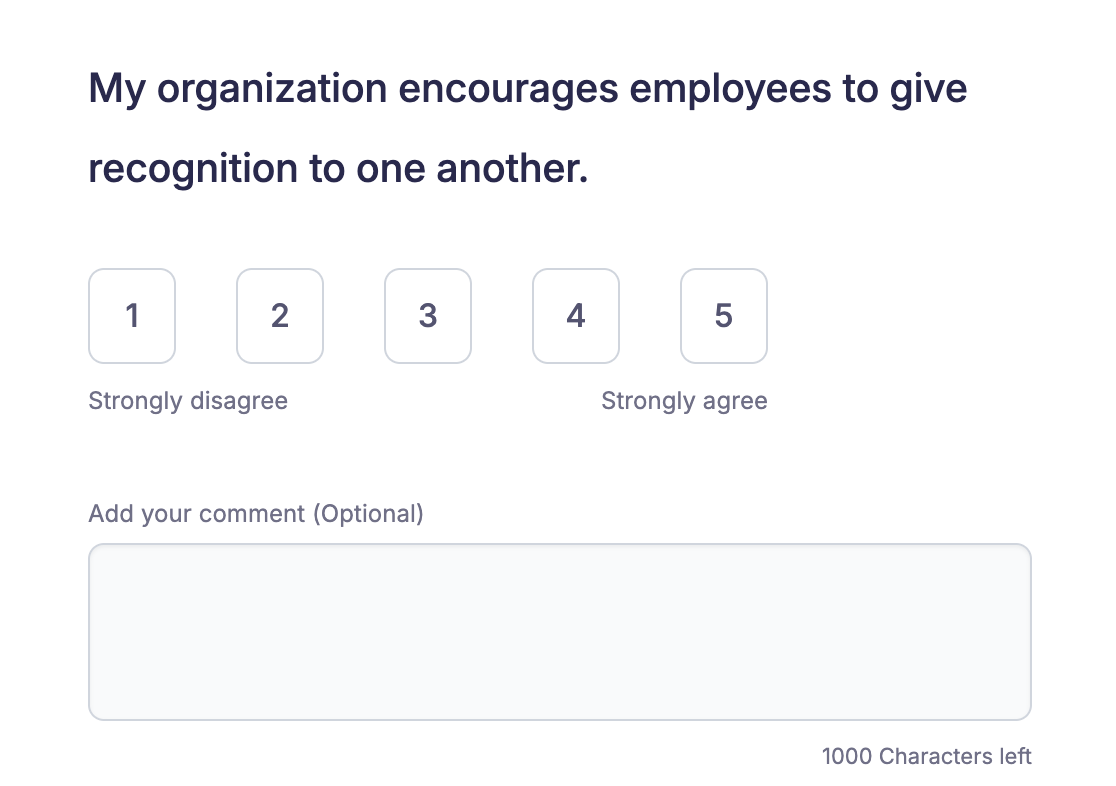
(Source: Vantage Pulse)
eNPS is fast and gives you a quick pulse on overall sentiment. There is a small problem though. It does not tell you why someone would or wouldn’t recommend you. If there is a drop in your eNPS score, then you know there’s a problem, but you won’t know the entire picture.
3. EES (The Emotional Investment)
The Employee Engagement Score sits somewhere in the middle. What does it measure? It measures emotional investment and commitment.
How is it done? Typically through a focused set of questions about how connected employees feel about their work and the organization.
It's more nuanced than eNPS but less comprehensive than a full EEI. Think of it as a mid-level gauge. It is useful for tracking emotional shifts without the depth of a full engagement analysis.
The bottom line? If you want actionable insights that tell you where to focus your engagement efforts, the employee engagement index wins. If you need speed and simplicity, eNPS works. And if you're tracking emotional connection specifically, EES is your middle ground.
How to Calculate Your Employee Engagement Index (Step-by-Step Example)
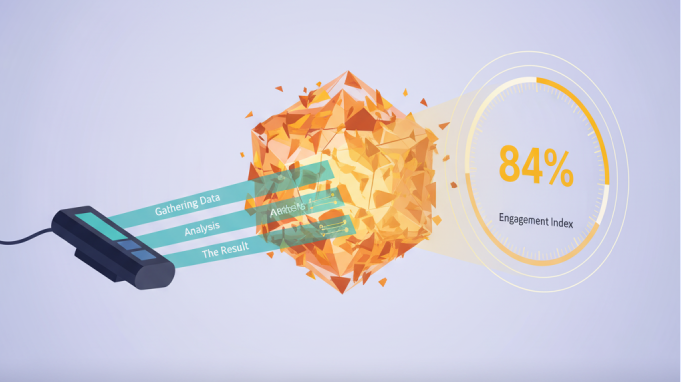
Employee engagement index calculation is not complicated but requires a clear process to ensure accuracy.
Here's exactly how to do it.
Step 1: Design Your Survey
You can start with a Likert scale survey. This is the standard 5-point rating system where employees respond to statements about their work experience:
- 1 = Strongly Disagree
- 2 = Disagree
- 3 = Neutral
- 4 = Agree
- 5 = Strongly Agree
Your survey should include questions across key engagement drivers that include:
- Job satisfaction
- Manager relationships
- Growth opportunities
- Alignment with company values
- Workload balance.
Aim for 10-15 well-crafted questions to get good data and the overall picture of the organization.
Step 2: Tally the Responses
Once responses are in, calculate your Total Actual Points. This is done by adding up all the point values from every employee's answers.
For example: Let's say you surveyed 50 employees with 10 questions each. If the sum of all their responses is 2,150 points, that's your Total Actual Points.
Step 3: Determine the Maximum Possible Score
Now figure out what a perfect score would look like. If every employee gave a "5" (Strongly Agree) to every question, what would your total be?
Using our example: 50 employees × 10 questions × 5 points = 2,500 maximum possible points.
Step 4: Use the Formula
Here's your employee engagement index formula:
Employee Engagement Index = (Total Actual Points / Total Maximum Possible Points) × 100
Applying our example:
- Total Actual Points = 2,150
- Total Maximum Possible Points = 2,500
- EEI = (2,150 / 2,500) × 100 = 86%
An 86% engagement index means your workforce is performing at 86% of maximum possible engagement. That's solid, but it also shows you have 14% room for improvement.
Example: Employee Engagement Scorecard
Here's what this looks like in a real employee engagement scorecard:

The key is consistency. Use the same questions and scale every time you measure so you can track meaningful changes over time.
What Questions Should You Ask (and Avoid) for an Accurate EEI?
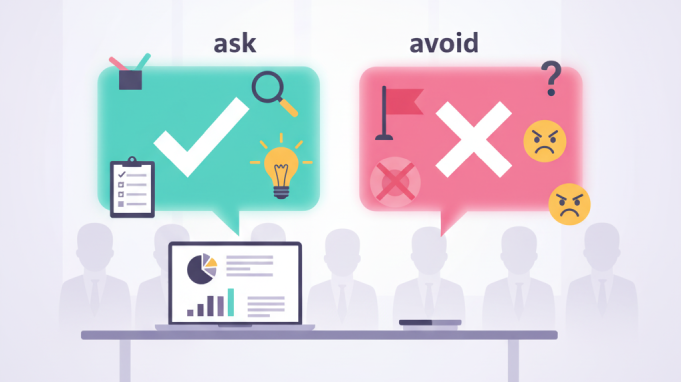
Not all survey questions are created equally.
If you ask the wrong ones, your employee engagement index will give you misleading data.
However, asking the right ones will lead genuine insights about commitment and connection.
Here's what actually works—and what doesn't.
High-Impact Questions to Include
These questions consistently predict engagement and retention better than generic satisfaction queries:
Q. "I would enthusiastically recommend this organization as a great place to work."
What it does: This captures advocacy. When someone is willing to stake their reputation on recommending your company, that's real engagement. It goes beyond personal satisfaction to measure trust in the organization as a whole.
Q. "I seldom consider opportunities at other companies."
What it does: This measures commitment without artificial time constraints. It's a clean indicator of whether someone is mentally checking out or genuinely invested in staying. The phrasing avoids the trap of making people predict their future circumstances.
Q. "I feel a strong sense of pride working for this organization."
What it does: Pride reflects emotional connection to your brand and mission. Employees who are proud of where they work bring that energy into client interactions, recruiting conversations, and day-to-day performance. It's one of the strongest predictors of discretionary effort.
Q. "My work gives me a sense of personal accomplishment."
What it does: This taps into intrinsic motivation. People who find meaning in their work are engaged at a deeper level than those simply completing tasks for a paycheck.
Q. "I see myself growing professionally at this company."
What it does: Future orientation matters. When employees believe there's room for development, they invest more in their current role and stay longer.
Questions to Avoid
These questions seem reasonable but often lead to vague data:
Q. "Overall, I am satisfied with this company."
What it does: Satisfaction is a low bar. Someone can be satisfied with their steady paycheck and decent benefits while being completely disengaged from the work itself. Satisfaction doesn't predict retention, effort, or advocacy. These are the things that matter for business outcomes.
Q. "I plan to be working here in two years."
What it does: This sounds useful, but it's problematic. A highly engaged employee nearing retirement might answer "no." Someone planning to relocate for family reasons will answer "no." You'll get false negatives that have nothing to do with engagement. Focus on current commitment, not future predictions tied to personal circumstances.
Q. "My manager checks in with me regularly."
What it does: Frequency doesn't equal quality. A manager can check in daily and still be ineffective. Instead, ask about the impact of manager interactions: "My manager helps me grow professionally" or "I trust my manager to support my success."
The goal isn't to ask more questions, it's to ask better ones. Your employee engagement scorecard should prioritize quality indicators that actually correlate with retention, productivity, and business outcomes.
How To Interpret Your EEI Score?

Context is an important part. And numbers without context do not tell you the entire picture.
For example: An engagement index score of 80% might sound impressive, but is it good for your industry? Compared to what? That’s where interpretation comes in.
What is a Good Employee Engagement Index Score?
A "good" EEI score varies depending on industry standards and organizational goals. However, general benchmarks can provide guidance:
- Global Average: According to Gallup, only 21% of employees worldwide are engaged at work.
- Best-Practice Organizations: These organizations report engagement levels around 70%, indicating a highly engaged workforce (Gallup)
- Industry Averages: For instance, in Q3 2024, Hive HR reported an engagement index of 7.2, with pride at 7.8 and loyalty at 6.4.
While these figures offer a reference point, it's essential to consider your organization's unique context when evaluating your EEI score.
Using Industry Benchmarks for Context
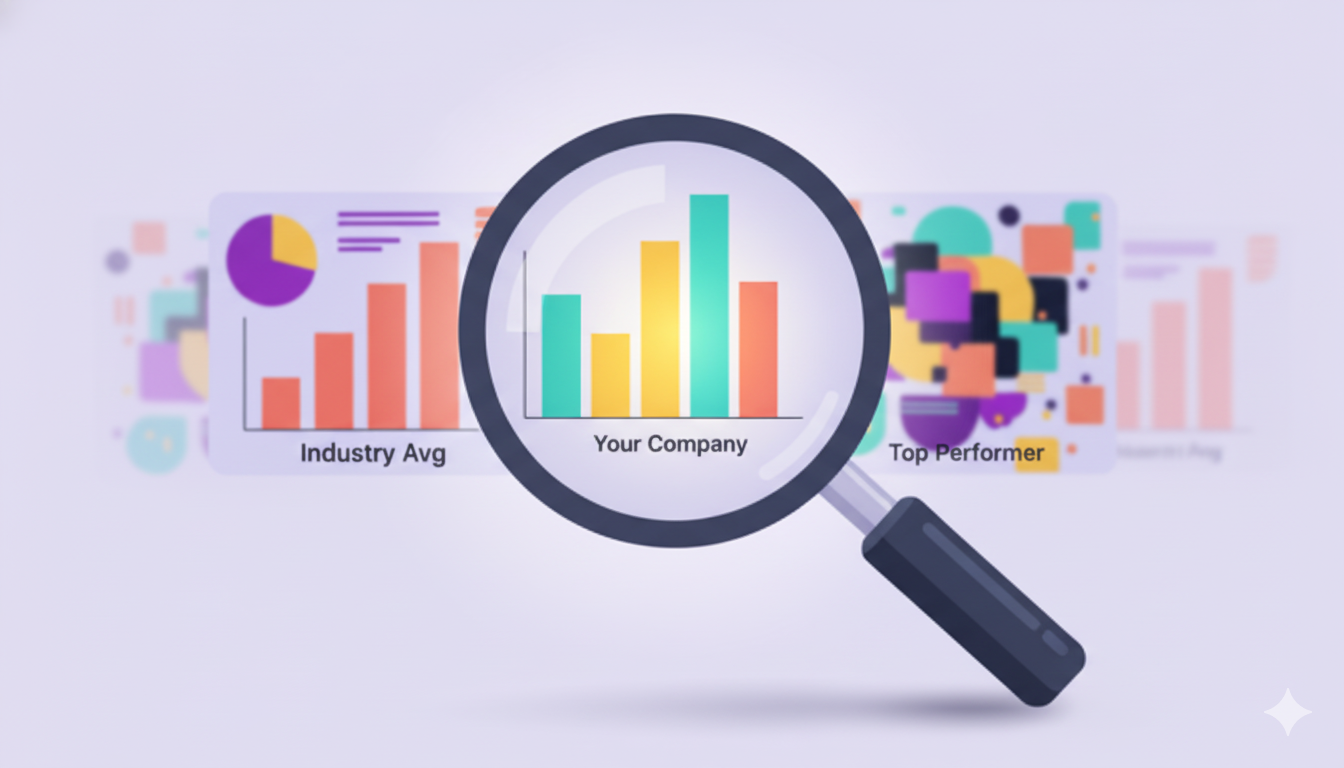
Industry benchmarks serve as valuable reference points, allowing organizations to compare their EEI scores against peers. However, it's important to use these benchmarks wisely:
- Reference, Not Targets: Benchmarks provide context but shouldn't be the sole target. It should be your base to aim for continuous improvement tailored to your organization's needs.
- Consider Industry Variations: Engagement levels can vary significantly across industries. For example, healthcare organizations may have different engagement baselines compared to tech firms. Try to take into consideration your industry and modify your index based on it. This will give you a holistic engagement index in the long run.
- Adjust for Organizational Factors: Internal factors such as company size, culture, and recent changes can influence engagement scores. Ensure that benchmarks are adjusted accordingly.
- Regular Comparison: Periodically compare your EEI scores with industry benchmarks to assess progress and identify areas needing attention.
How Can You Actively Improve Your EEI Score?

Measuring your employee engagement index is only half of the battle. The real work begins when you take action on what the data tells you. Here's what actually moves the needle.
1. Strengthen Performance Feedback
The relationship with a direct manager of an employee is the strongest indicator of engagement. But organizations miss out on one thing: the quality of feedback.
Managers need to provide constructive and regular feedback which is useful. The feedback should not be vague and that will confuse the employee. It should include specific observations tied to outcomes and growth.
To achieve this, train your managers to have real conversations. When employees understand how their work contributes to bigger goals, engagement naturally follows.
Quick win: Implement bi-weekly 15-minute check-ins focused on progress, roadblocks, and development—not just task updates.
2. Invest in Training and Development
Employees love opportunities that grow their skills and advance their careers. Show employees a clear path forward and they will stay engaged.
This means creating visible pathways through mentorship, cross-functional projects, and skill-building workshops. The key is making development part of everyday workflow not a once-a-year event.
Unique approach: Let employees own their development plans. Give them a budget (time or money) to pursue learning that aligns with both their interests and company needs. Autonomy in growth drives intrinsic motivation.
3. Promote a Culture of Recognition
Recognition is about meaningful acknowledgment towards employees for their contributions. It should not be surrounded with your average “employee of the month” plaques.
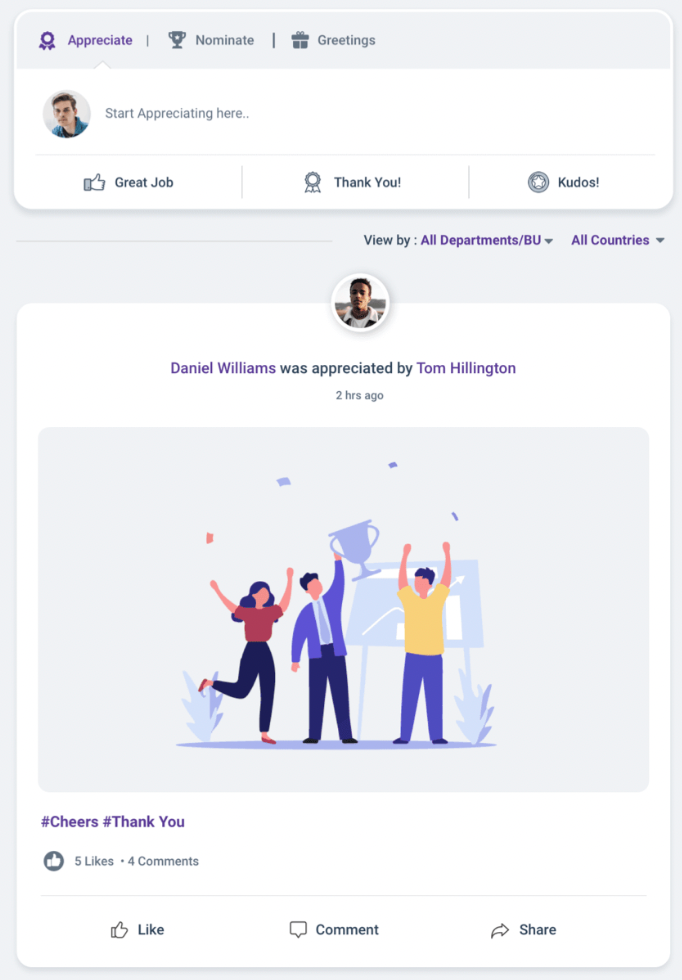
The means of recognition are always different be it public recognition or a quiet thank you. The preferences differ for every individual. The best recognition is timely, specific, and tied to values that matter.
(Source: Vantage Recognition)
When employees see that different levels of performance lead to different levels of recognition and reward, it reinforces a culture of excellence.
Unique approach: Implement peer-to-peer recognition systems where employees can acknowledge each other's contributions. It builds camaraderie and spreads recognition beyond just manager-to-employee dynamics.
The perfect leader for this comes in the form of Zappos and their “Zollar” program. In this program, peers acknowledge each other through a digital currency for going the extra mile. This currency can be used for Zappos swag, cinema vouchers, raffle tickets for other prizes, or charitable donations.
4. Foster Collaborative Management
The biggest killer of engagement are silos. Daily routine of the same work with no challenges can diminish the enthusiasm to work.
However, when managers actively support collaboration across teams, it encourages open communication. It also enables the employees to feel more connected to the bigger picture of their work.
This means breaking territorial behaviors, creating cross-functional projects, and rewarding collaborative wins, and not just individual achievements. Managers should model transparency by sharing information freely and creating forums where ideas can flow across departments.
Unique approach: Rotate employees through short-term projects in other departments. Exposure to different functions builds empathy, reduces silos, and helps people understand how their work connects to broader outcomes.
5. Support a Healthy Work-Life Balance
Supervisor support for work-life balance is a direct driver of engagement. But "balance" doesn't mean the same thing to everyone.
For some, it's flexible hours. For others, it's not being expected to answer emails at 10 PM. The key is giving employees freedom over how they manage their energy and time, not just dictating policies. When managers actively support people in setting boundaries and managing their workload, burnout decreases and engagement rises.
Unique approach: Encourage "focus time" blocks where meetings are off-limits and employees can do deep work without interruption. Protect this time at the team level so it becomes cultural, not just individual preference.
You can take the example of Google that sticks to a hybrid work culture. Employees typically come into the office around three days a week, with the freedom to choose their workspace for the remaining two days. Some positions are 100% remote, and employees get around 4 weeks every year to work from anywhere.
Conclusion!
At the end of the day, your Employee Engagement Index isn’t just a number—it’s a mirror. It reflects how your people feel, not just how they perform. When that number starts to climb, it means your culture is working, your managers are connecting, and your employees are thriving.
So, don’t just measure engagement—act on it. Every conversation, recognition, and growth opportunity you create moves that index from a score on a dashboard to something far more powerful: a team that genuinely wants to be there.
FAQ
Q1. What are the Components of the Employee Engagement Index?
A. The EEI is typically built on three core components—enthusiasm, commitment, and discretionary effort—reflecting how motivated, aligned, and proactive employees are in their roles.
Q2. How often should we measure our EEI?
A. Ideally, measure your EEI quarterly or biannually to track trends, spot early warning signs, and evaluate the impact of engagement initiatives.
Q3. What's the difference between engagement and satisfaction?
A. Satisfaction is about being content at work; engagement is about being emotionally and intellectually invested in the organization’s success.
Q4. Who is responsible for improving the EEI score?
A. While HR drives the strategy, managers and leaders are equally responsible for building daily experiences that foster engagement.

He has worked in the human resources environment and has elevated recognition and rewards through his insightful and detailed writing. He aims to enhance the practice of Recognition in the workplace with new ideas and innovation that will help shape the work culture. For any related queries, contact editor@vantagecircle.com