Effective people management is built on a set of skills that influence how managers communicate, support performance, recognize contributions, and build trust within their teams. These skills are not simply a matter of personality or instinct. They can be developed and strengthened with the right approach.
Research supports the importance of getting these skills right. Vantage Circle's 2025 State of Recognition & Rewards Report found that high-effectiveness recognition programs are 2 to 3 times more likely to recognize specific behaviors rather than just outcomes. This highlights a broader principle of people management: how managers lead and recognize employees can be just as important as what they achieve.
So, what does effective people management actually involve? This guide walks through what people management is and why it matters, the four pillars every manager operates from, the 10 core skills that sit inside them, real examples of each skill in practice, how to sharpen them over time, and the questions to expect when the skill is what gets you hired.
What Are People Management Skills?
People management skills, sometimes called people manager skills, are the soft and hard abilities a manager needs to lead, communicate with, motivate, and develop the people who report to them. They differ from the broader set of core management skills in one specific way: management skills also cover planning, budgeting, and process work, while people management skills focus narrowly on the relationship between a manager and the humans on their team.
What is people management, in practice? It is the ongoing work of hiring, guiding, developing, and retaining the people on a team, as distinct from managing the tasks or projects those people happen to be working on. A manager can run a project flawlessly and still fail at people management if the team behind that project burns out or leaves. Both skill sets matter, but only one of them is the subject of this guide.
Every people management skill splits into one of two buckets: hard skills you can train directly, and soft skills you build through repetition and feedback.
Hard Skills vs. Soft People-Management Skills
| Hard Skills | Soft People-Management Skills |
|---|---|
| Delegation | Communication |
| Performance goal-setting | Empathy |
| Scheduling and workload planning | Emotional intelligence |
| Conflict-resolution process | Trust-building |
| One-on-one meeting structure | Active listening |
| Recognition tracking | Adaptability |
A manager can learn the hard skills from a checklist. The soft skills on the right are what actually determine whether the hard skills land, which is why 8 of the 10 skills below sit closer to that soft-skill column.
Why People Management Skills Matter
"The quality of a manager is the single biggest factor in the performance and engagement of their team," according to McKinsey's Boss Factor research, a finding built on more than a million employee responses across over a thousand organizations. That single relationship explains why two teams with the same product, pay, and perks can have completely different engagement scores: the manager, not the mission statement, is what an employee experiences every day.
Vantage Circle's own 2025 State of Recognition & Rewards Report adds a sharper, platform-level version of that finding: high-effectiveness recognition programs are 2 to 3 times more likely to reward specific behaviors, not just outcomes, than lower-performing programs are. The lesson for a manager is concrete: the next time recognition happens, name the behavior, not the result, and the recognition is more likely to change what the team does next.
Google reached a similar conclusion from a different angle. Project Oxygen, its internal study of what makes its own managers effective, identified the 10 behaviors shared by its best managers and published the full list through Google's re:Work program. The top three are being a good coach, empowering the team without micromanaging, and creating a team environment that values everyone. "Have key technical skills" sits at 8th of 10, well below the people-focused behaviors. Technical know-how still has a place in a manager's toolkit, but it is rarely what separates a good people manager from an average one.
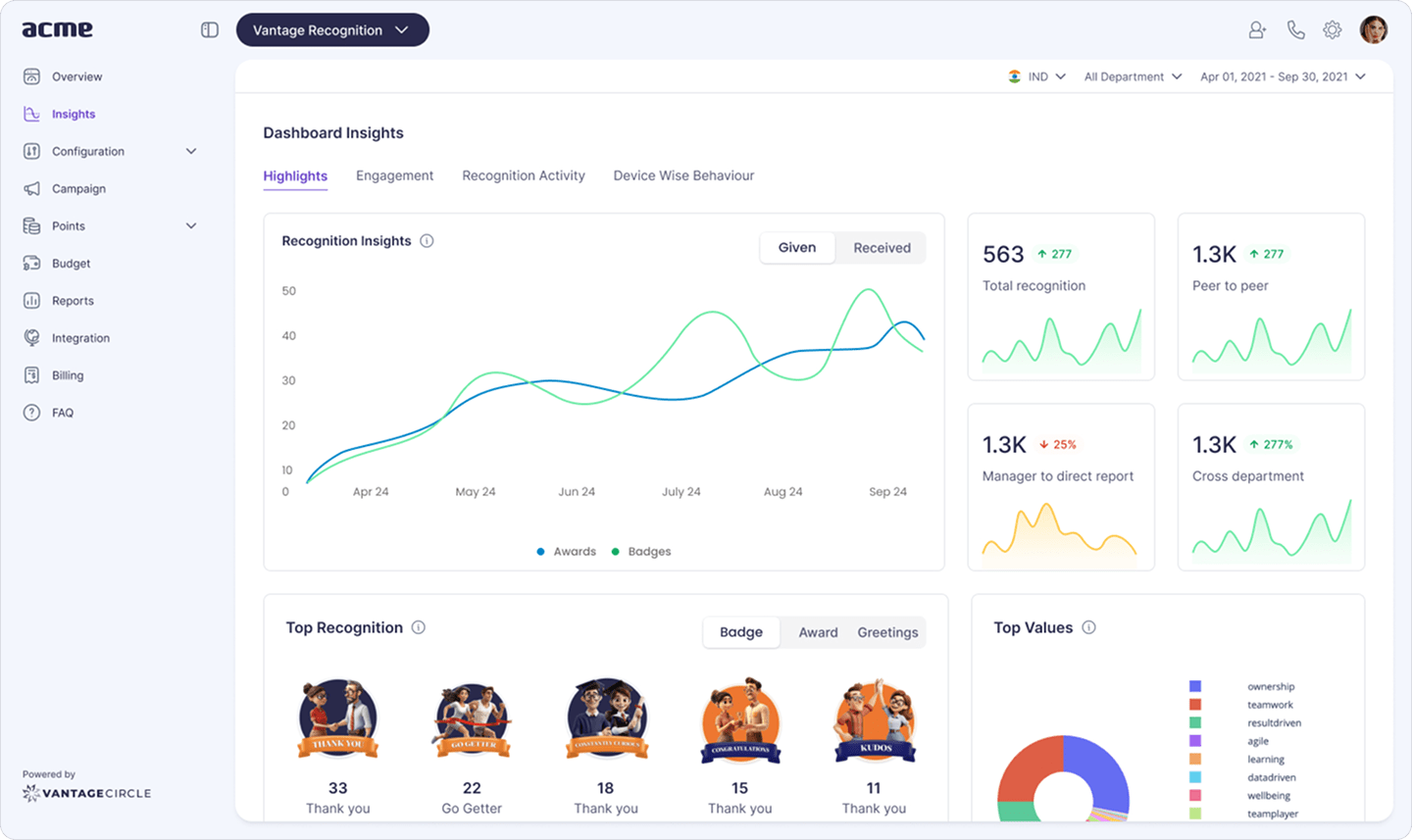
Managers often cannot see their own blind spots here. Recognition Analytics gives them a data view of exactly how consistently they are recognizing their team relative to peers, turning "am I doing enough" from a hunch into a number they can track.
The 4 Pillars of People Management
Every one of the 10 skills below falls into one of 4 pillars: connect, grow, align, and sustain. Connect covers leadership, communication, and emotional intelligence, the skills that build trust before anything else works. Grow covers mentoring and delegation, the skills that develop people rather than just directing them. Align covers planning and stakeholder management, the skills that keep a team's work pointed at the right goal. Sustain covers conflict resolution, flexibility, and recognition, the skills that keep a team functioning and motivated over the long run.
The pillars matter more than the list, because a manager who is strong on Connect but weak on Sustain will build a team that likes them and then quietly burns out.
10 Core People Management Skills Every Manager Needs
The 10 core people management skills are leadership, communication, emotional intelligence, delegation and empowerment, planning and organization, mentoring and coaching, conflict resolution, flexibility and support, stakeholder management, and recognition.
1. Leadership
A manager with strong leadership skills keeps employees engaged by giving them a reason to follow, not just a reporting line that requires it. Every team culture is different, and getting a group of people to believe in the same goal takes more than issuing instructions.
How to develop it: Before your next team meeting, write down the one outcome you most want people to walk away believing, not just knowing. Direction sticks better than information.
Related: Leadership Qualities of Great Leaders
2. Communication
Communication is the skill that makes every other people management skill visible, because a manager with good judgment who explains it badly loses the team's trust anyway. It means setting clear expectations, giving feedback that actually lands, and explaining the reasoning behind a decision, not just the decision itself.
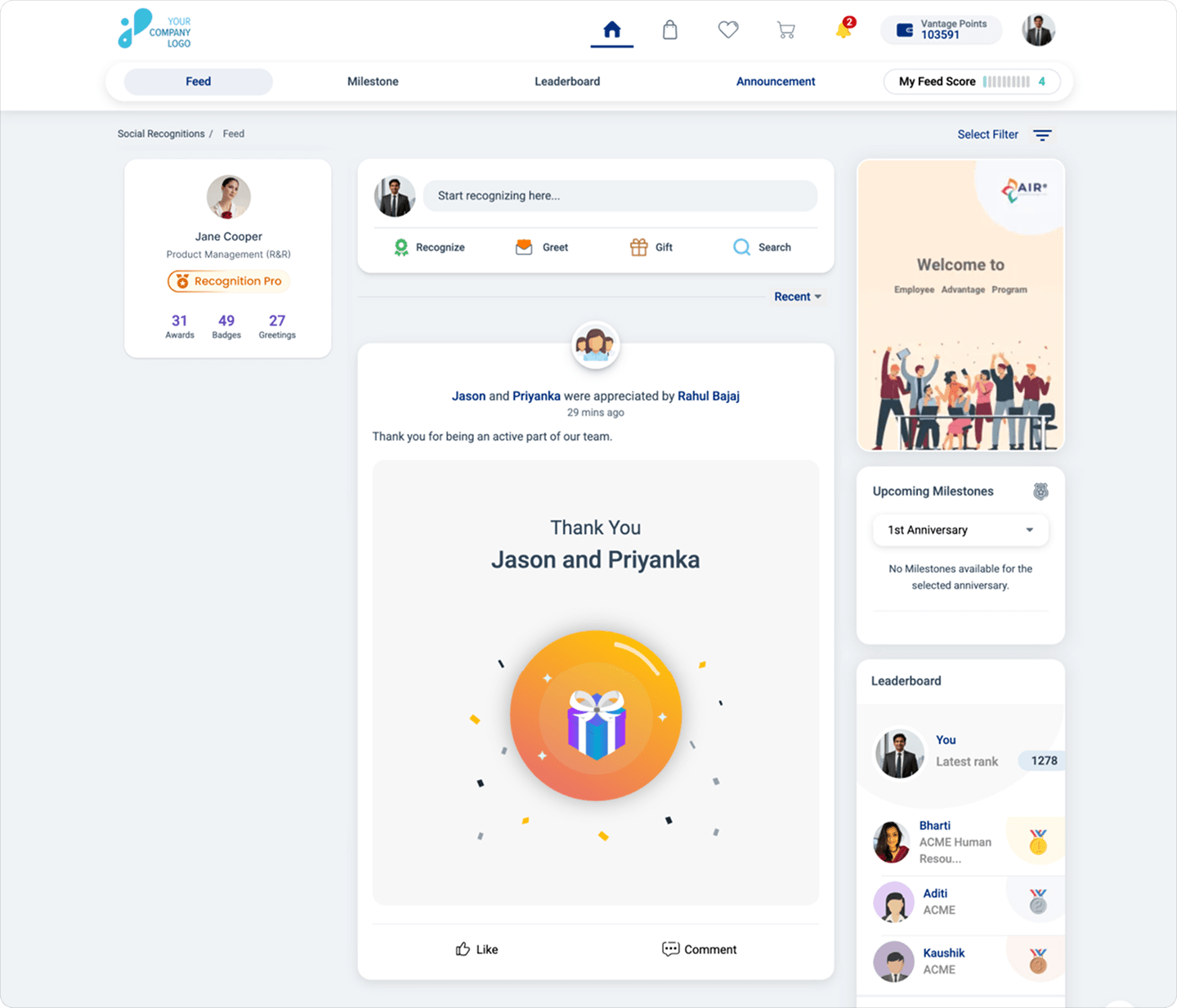
Regular, specific recognition is one of the clearest communication signals a manager can send, because it tells an employee exactly what is valued and why, not just that something vaguely went well. Vantage Recognition's social feed makes that signal visible to the whole team, not just the person recognized.
How to develop it: Prioritize active listening in your next 1:1 before jumping to advice. Most miscommunication starts with a manager who answered a question the employee didn't actually ask.
3. Emotional Intelligence
Emotional intelligence is the ability to identify, manage, and understand your own emotions and the emotions of the people around you, and it is one of the most decisive people management skills a manager can build. It shows up as staying composed under pressure, sensing when someone is struggling before they say so, and adjusting your tone without losing your point.
How to develop it: Before reacting to bad news from your team, name the emotion you're feeling before you respond out loud. That five-second pause is most of what separates a reactive manager from a composed one.
Related: Understanding and Utilizing Emotional Intelligence in the Workplace
4. Delegation and Empowerment
Delegating well means handing off real ownership of a task, not just the busywork, to the person best positioned to run with it. Empowerment works both ways: when employees can also recognize each other, not just wait on a manager, trust and ownership spread across the team instead of staying concentrated at the top.
Peer-to-peer recognition lets teammates acknowledge each other's work directly, which is delegation applied to appreciation itself, not just tasks.
How to develop it: Pick one task you're doing yourself purely out of habit, not necessity, and hand it off this week with a clear definition of what "done" looks like.
Related: Employee Empowerment: Are You Doing it Right?
5. Planning and Organization
Planning and organization means being ready for change, not just for the plan you already made. It is a fundamental skill for keeping a team's work coordinated and for helping people through periods of shifting priorities without losing momentum.
How to develop it: Build one backup plan for your team's highest-risk deadline this month before you need it, not after something slips.
6. Mentoring and Coaching
Employees who get mentored by their manager report higher engagement and stay longer, because mentoring signals that a manager is invested in their growth, not just their output. Establishing that relationship, even informally, fosters a sense of appreciation that a performance review alone never delivers.
Mentoring does not require a formal program to work. A manager who sets aside 20 minutes a month to talk career growth, separate from status updates and performance feedback, gives an employee something most companies never formally schedule.
How to develop it: Ask one direct report what skill they most want to build this quarter, then commit to one concrete way you'll help them practice it.
7. Conflict Resolution
Stepping into disagreement early, before it hardens into resentment or spills into the rest of the team, is what conflict resolution actually looks like in practice. Conflict rarely announces itself directly; it usually shows up first as disengagement, a dip in collaboration, or two people who used to work fine together suddenly avoiding each other.
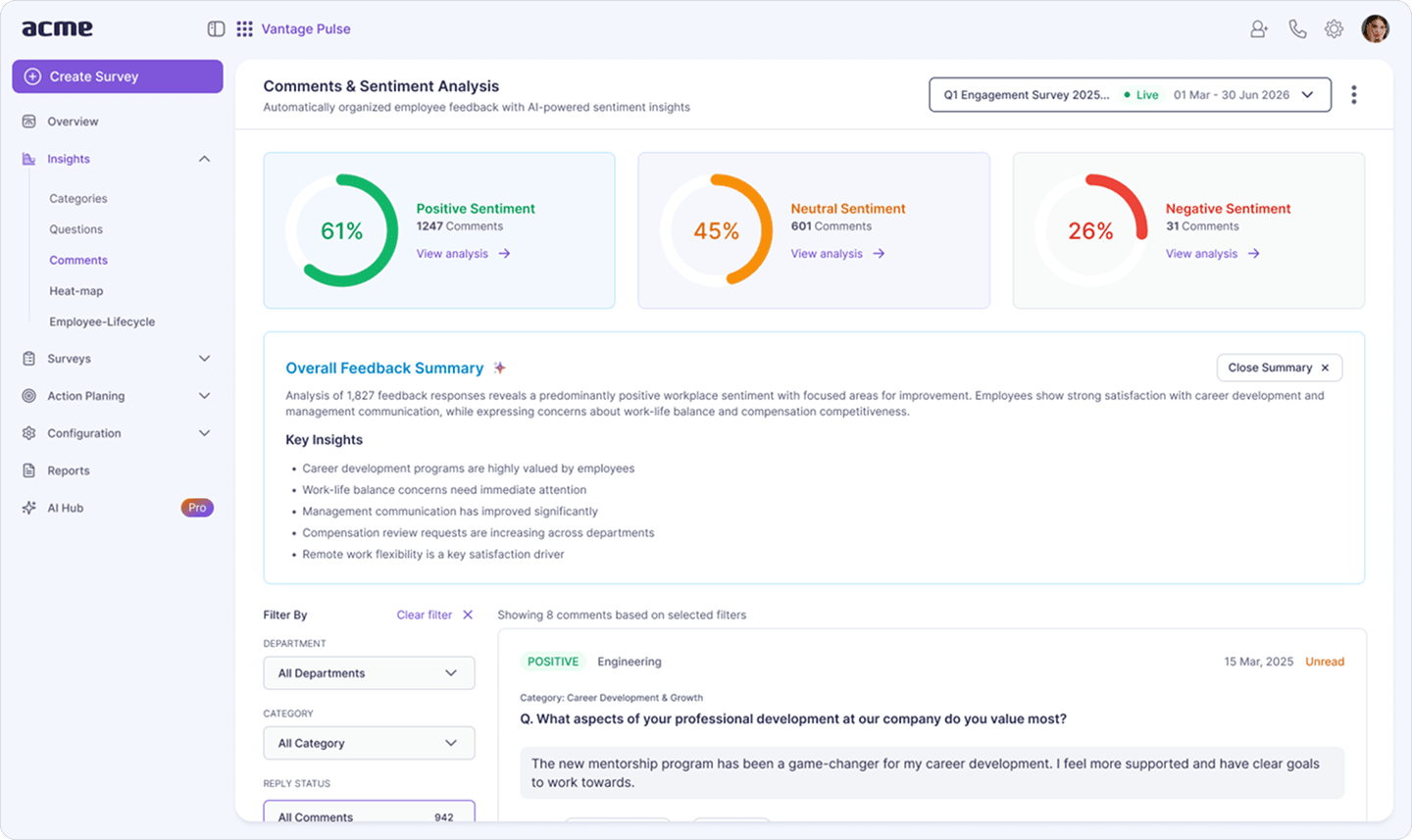
Emotionally intelligent managers read the room, but they cannot be everywhere. Vantage Pulse's sentiment analysis flags that kind of shift in employee feedback before it turns into a resignation letter, giving a manager the lead time to step in while the issue is still small.
How to develop it: The next time you notice tension between two team members, name it directly and privately with each of them within the week, rather than hoping it resolves on its own. It rarely does.
8. Flexibility and Support
Every employee brings a different working style to the table, and there is no single approach that fits all of them. Some perform best with autonomy, others need closer check-ins, and a manager who insists on one style for everyone will lose the people on the wrong end of that mismatch.
If someone on your team needs to work from home to handle a family situation, supporting that decision builds loyalty that shows up later in ways a policy manual never predicts.
How to develop it: In your next 1:1, ask directly how someone prefers to receive feedback and adjust your default style to match, at least for them.
9. Stakeholder Management
Understanding stakeholders means knowing who's who and what matters most to them, inside and outside your immediate team. It lets a manager keep everyone's priorities visible instead of assuming alignment that was never actually confirmed, whether the stakeholder is a peer manager, a skip-level leader, or a cross-functional partner your team depends on.
Department-wise engagement trends, surfaced through the same survey platform, let managers and HR compare how their team's priorities stack up against everyone else's instead of guessing.
How to develop it: Map out the 3 people outside your team whose priorities most affect your work, and confirm directly with each of them what they actually need from you this quarter.
10. Recognition
Top performers who go unrecognized quietly disengage long before they announce it, and a manager who saves all feedback for the annual review will lose them without ever seeing it coming. A specific shout-out, given close to the moment it was earned, does more for retention than a generic compliment ever will.
Recognition and employee performance move together more than most managers realize: behavior that gets acknowledged tends to repeat, and behavior that goes unnoticed tends to fade, which makes recognition one of the cheapest performance levers a manager has.
Related: 50 Rewards and Recognition Ideas to Boost Employee Recognition
How to develop it: Recognize one specific action, not a person's general attitude, before the end of every week. "Good job this week" builds nothing; "the way you handled that client escalation on Tuesday" is what people remember and repeat.
People Management Skills Examples in Practice
Reading a skill on a list is easy. Recognizing it in a real workplace moment, in time to actually act on it, is the harder, more useful test.
Skill to Real Workplace Example
| Skill | Real Workplace Example |
|---|---|
| Communication | Explaining why a deadline moved, not just that it moved |
| Delegation | Handing a client relationship to a direct report, not just its paperwork |
| Emotional Intelligence | Noticing a normally vocal team member has gone quiet in meetings |
| Conflict Resolution | Addressing two teammates avoiding each other before it affects a project |
| Flexibility | Letting a caregiver on the team shift their hours instead of enforcing a fixed schedule |
| Recognition | Naming the specific action behind a "great work" instead of leaving it generic |
How to Improve Your People Management Skills
Learning how to manage people effectively is less about any single insight and more about attaching each skill to one specific, repeatable action, not a training you complete once a year and never revisit.
- Ask for feedback on a schedule, not just after something goes wrong. A standing question in your monthly 1:1s, like "what's one thing I could do differently," surfaces problems while they are still small.
- Find someone strong in the skill you're weakest in and watch how they actually handle it in the moment. That teaches more than reading about it.
- Measure your own management, not just your team's output. Vantage Pulse's engagement dashboard scores your team's leadership and communication experience as its own metric, alongside eNPS and participation, so you get an honest read instead of relying on how it feels in the room.
- Rate yourself now, before you forget. Score each of the 10 skills above from 1 to 4, add them up out of 40, and revisit the same scorecard again in 90 days. A total under 20 means pick one skill and commit to a single development action for the quarter, not all ten at once.
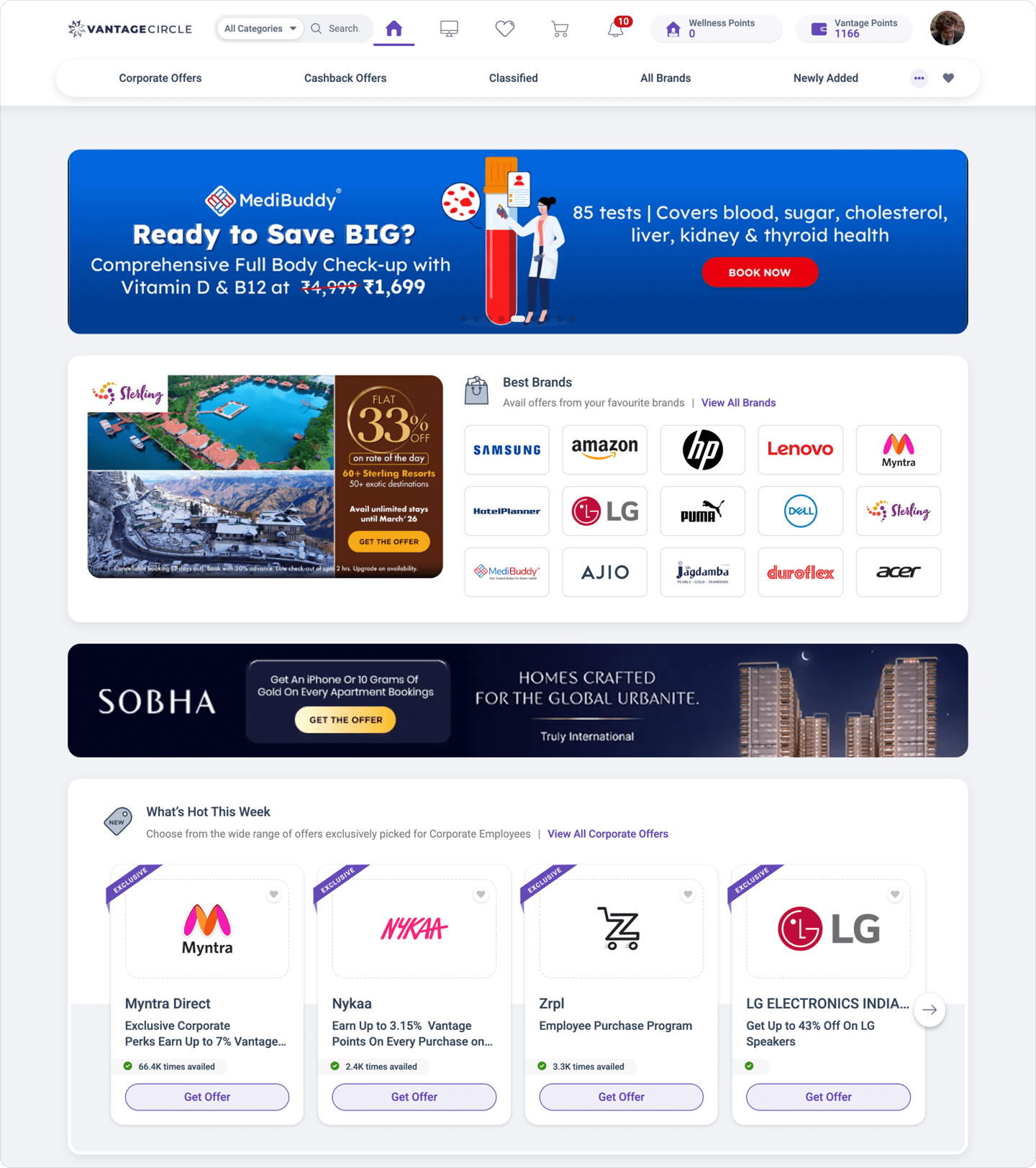
Formal people management training still matters for the skills that don't build well from experience alone, like structured feedback frameworks or conflict-resolution processes. Once a manager does invest that time, Vantage Perks lets a company back that effort with real, redeemable rewards, corporate discounts and cashback across 1,000-plus brands, so growth gets reinforced with something tangible, not just a certificate.
People Management Skills for Interview Prep
Interviewers rarely ask "do you have good people management skills" directly. Instead, people management interview questions ask around it, testing one specific skill through a story rather than a self-rating.
Sample Interview Question to What It's Testing
| Sample Interview Question | What It's Testing |
|---|---|
| "Tell me about a time you gave difficult feedback." | Communication and emotional intelligence |
| "Describe a project you delegated and how it turned out." | Delegation and trust in others |
| "How do you handle two team members who disagree?" | Conflict resolution |
| "How do you adjust your management style across different people?" | Flexibility and support |
| "How do you make sure your team feels recognized?" | Recognition and motivation |
Frequently Asked Questions
What are the 5 key people management skills?
The 5 key people management skills most often cited are communication, emotional intelligence, delegation, conflict resolution, and recognition. Together they cover the core of the job: explaining clearly, reading people accurately, handing off ownership, resolving friction early, and making sure good work gets noticed.
What are people management skills?
People management skills are the practical abilities a manager uses to lead, motivate, and support the people who report to them, built from communication, empathy, delegation, and accountability working together. They are distinct from technical or process skills because they focus specifically on the manager-employee relationship, not on the work itself.
What are the 5 basic management skills?
The 5 basic management skills, the ones every new manager needs first, are communication, planning, delegation, problem-solving, and time management. This shorter list strips management down to what's needed from day one, before the more advanced people-specific and conceptual skills get added as a manager grows into the role.
What are the 10 management skills?
The 10 people management skills covered in this guide are leadership, communication, emotional intelligence, delegation and empowerment, planning and organization, mentoring and coaching, conflict resolution, flexibility and support, stakeholder management, and recognition. For the broader set that also covers planning, budgeting, and process work, see core management skills.
What are 5 qualities of a good manager?
The 5 qualities most commonly linked to good management are integrity, empathy, accountability, adaptability, and strong communication. These are the underlying traits that make the 10 skills above stick; a manager can learn every skill on this list and still fail a team if these qualities aren't there to back it up.
Can you give me some examples of management skills?
Examples of people management skills in action include explaining why a deadline changed instead of just announcing it, handing a direct report real ownership of a client relationship, and naming the specific action behind a "great work" instead of leaving the praise generic. Each example is a skill from the 10-skill list above applied to one concrete workplace moment.
The Bottom Line
People management skills are not a fixed trait some managers are born with and others aren't. They are built the same way any of the 10 skills above are built: through one repeatable, specific action attached to a real moment, not an annual training or a single motivational talk.
Score yourself against the 10 skills, start with whichever one scored lowest, and check your score again in 90 days.


Lupamudra is a content marketing specialist at Vantage Circle, where she has written 50+ articles on employee recognition, rewards, and workplace culture, alongside employee engagement, diversity and inclusion, and HR compliance topics, including how India's tax rules apply to recognition and rewards programs.
Connect with Lupamudra on LinkedIn.