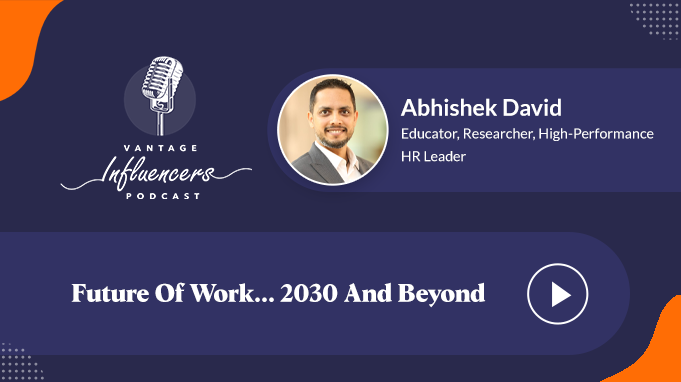
Future Of Work... 2030 And Beyond
Episode Overview
Abhishek David argues that the future of work is being reshaped by three shifts happening at once: hyper-automation and AI-driven workforce structures, a fast-growing gig economy that trades role-based jobs for task-based work, and a 360-degree view of well-being that folds financial, mental, and purpose-driven needs into how organizations define a "good job." He grounds this in the UAE's own policy moves, including the shift to a four-and-a-half-day work week and a Saturday-Sunday weekend aligned with global norms, both part of the government's five-decade "UAE Centennial 2071" agenda built around innovation, technology, and talent development. Against a projected shortfall of 85.2 million workers globally by 2030, he says attracting and retaining top talent will come down to flexibility, remote-work visas, strong digital infrastructure, and reward strategies that move from generic pay toward individually tailored recognition.
On automation, he doesn't shy away from the scale of disruption: he cites research suggesting that close to 80 percent of documentation-heavy banking jobs could disappear within five to six years, and expects HR, finance, and other back-office functions to see similarly steep declines in repetitive work, replaced by smaller teams that train and supervise the machines instead. His answer isn't to resist that shift but to build "techno" hybrids, professionals who pair deep HR or banking expertise with technical fluency, and leaders who make decisions on lead indicators (predictive data) rather than lag indicators (what already happened). He ties diversity, equity, and inclusion directly to this transition, arguing that DEI's real value lies in the sense of belonging it creates, which in turn drives the innovation, engagement, and productivity organizations will need to survive the coming skills upheaval. He closes on a leadership note: as industries blur (a bank is a fintech and a fintech is a bank, in his words) and organizations lean harder on data and machines, the leaders who succeed will be the ones who stay empathetic, build psychological safety, and keep a human connection at the center of every AI-driven decision.
Episode Highlights
- Abhishek David identifies three simultaneous shifts defining the future of work: hyper-automation and AI-driven workforce models, a move from role-based jobs to task-based gig work, and a 360-degree view of well-being covering financial, mental, and purpose-driven needs.
- He points to the UAE's move to a four-and-a-half-day work week, a Saturday-Sunday weekend, and the government's five-decade "UAE Centennial 2071" plan as evidence of how fast national policy is adapting to future-of-work pressures.
- Citing a projected global talent shortage of 85.2 million people by 2030, he says attracting top talent will depend on flexibility, remote-work visas, strong digital infrastructure, and individually tailored rewards rather than generic pay.
- He expects automation to eliminate a large share of repetitive banking, HR, and finance work, close to 80 percent of documentation-heavy banking jobs within five to six years, while creating demand for hybrid "techno" professionals who can train and supervise AI systems.
- Diversity, equity, and inclusion matter most, in his view, for the sense of belonging they build, which he links directly to innovation, engagement, and productivity.
- He argues future leaders need empathy and psychological safety more than authority, and that organizations should shift from lag-based decisions (what already happened) toward lead-based, predictive data.
About the Guest
Abhishek David, HR Management Executive & Transformation Leader, Research Scholar at Indian School of Business
Abhishek David brings 17 years of hands-on HR experience across large multinational firms, spanning recruitment, executive search, compensation and benefits, rewards and recognition, HR business partnering, operations, and digital transformation. He has led HR transformation projects centered on the future of work, sustainability, and organizational change, and currently researches the intersection of HR and sustainability as a doctoral student and research scholar at the Indian School of Business. His paper on the future of work was selected by the Academy of International Business, and he has been recognized as a top 25 HR influencer and a top 50 thought leader by two separate organizations. Abhishek is known for his strategic partnerships with senior management and his expertise in succession planning, leadership development, diversity and inclusion, and building high-performance cultures.
Connect with Abhishek on LinkedIn
Host
Susmita Sarma, Vantage Influencers Podcast Host
What You Will Learn
- Why Abhishek David believes hyper-automation, gig work, and holistic well-being are the three forces reshaping work through 2030 and beyond
- How UAE government policy, including the four-and-a-half-day work week and the "UAE Centennial 2071" plan, is responding to future-of-work pressures
- What a projected 85.2 million-person global talent shortage by 2030 means for how organizations attract and retain talent
- Which HR, finance, and banking functions are most exposed to automation, and what kind of "techno" hybrid roles are likely to replace them
- Why Abhishek ties diversity, equity, and inclusion to belonging, innovation, and business performance rather than treating it as a compliance checkbox
- How leaders can shift from lag-based to lead-based, predictive decision-making while keeping empathy and human connection at the center of AI adoption
Key Topics & Timestamps
| Timestamp | Topic |
|---|---|
| 00:53 | Introduction of Abhishek David and his background as a research scholar and HR thought leader |
| 01:35 | Abhishek's 17 years of hands-on HR experience across recruitment, compensation, HRBP, and digital transformation |
| 04:36 | Three forces reshaping the future of work: hyper-automation, gig work, and holistic well-being |
| 08:29 | Talent strategies amid a projected 85.2 million-person global talent shortage by 2030 |
| 09:22 | UAE government policy shifts: the four-and-a-half-day work week and the "UAE Centennial 2071" agenda |
| 16:20 | Diversity, equity, and inclusion as drivers of belonging, innovation, and performance |
| 20:12 | How automation and AI are reshaping banking, HR, and finance jobs |
| 28:22 | Empathy, psychological safety, and leading across generations |
| 32:12 | Shifting from lag data to lead, predictive decision-making in HR |
| 38:43 | Helping employees who struggle to keep pace with technological change |
Full Transcript
Click to read the full episode transcript
Welcome to the Vantage HR Influencers Podcast. This podcast is sponsored by Vantage Circle, the simple and AI-powered rewards and recognition platform for employee engagement. The future of work, 2030 and beyond, anticipates a transformative era driven by automation, artificial intelligence, and remote working trends. This shift promises to reshape traditional job roles, introduce new skills and ways of working, and require adapting to evolving workplace dynamics. Exploring these changes offers insights into how industries and individuals can thrive in the coming decade and beyond.
Hello, listeners. You're tuned in to the Vantage HR Influencers Podcast. I'm your host, Susmita, and to explore the future of work, 2030 and beyond, I have with me today Abhishek David. Abhishek is a research scholar at the Indian School of Business and a leading HR thought leader focusing on organizational behavior, HR transformation, culture, and change management.
Susmita Sarma: Hello, Abhishek. It's a pleasure to meet you.
Abhishek David: Hi, Susmita. Nice to be here, speaking with Vantage Circle today about an area that's very close to my heart: the future of work. Looking forward to it.
Susmita Sarma: Thank you. Before we begin, Abhishek, could you share a bit about your background as a research scholar and HR thought leader, particularly focusing on organizational behavior, HR transformation, culture, and change management?
Abhishek David: I come from a practice background. I have 17 years of hands-on HR experience and have led multiple HR transformation projects at large multinational firms operating across various businesses and territories. I've led transformation journeys around change management initiatives like the future of work and sustainability, helping organizations become more future-focused and aligned with evolving HR practices. I also have a keen interest in how AI, generative AI, and a digital mindset can be built into HR professionals so they can take their organizations forward. As a doctoral student, my individual research area sits at the intersection of HR and sustainability. I've also written papers on the future of work, one of which was selected by the Academy of International Business, and I have a strong interest in belongingness and the evolving landscape of work as the future of work advances. Very recently, I was recognized as a top 25 HR influencer and a top 50 thought leader by two different organizations, and I'm looking forward to more such recognition in my work and research areas.
Susmita Sarma: Almost 17 years, or over 17 years, of hands-on experience in HR.
Abhishek David: Yes. And that experience isn't limited to one area of HR. I've worked in recruitment, executive search, compensation and benefits, rewards and recognition, HR business partnering, operations, and digital transformation and tech enhancement roles. I've worked across almost every area of HR possible over the last 17 years.
Susmita Sarma: And particularly the topic of the future of work unfolding in 2030 and beyond, this clearly interests you a lot, and that's why it's our focus today. Given your extensive experience, Abhishek, how do you foresee the future of work in the coming years, particularly within the UAE market?
Abhishek David: I see three key areas where things are moving much faster and are fast-paced, not just here in the UAE but across the globe, though we'll talk in particular about the UAE. First, as a country, and across the Gulf and the GCC, the market is moving toward hyper-automation and a more AI-driven workforce structure.
Susmita Sarma: So AI could work for us, in a sense?
Abhishek David: Yes. Second, we're moving faster toward a gig economy and remote-work concepts, both in the UAE and Gulf region and globally. This is a shift from role-based or position-based models to more task-based work models. Third, and very important, everyone is now looking at a holistic experience: how organizations focus on well-being and view a job through a 360-degree lens that includes work-life balance and well-being. We'll unfold each of these three areas as we move through the discussion.
Susmita Sarma: And when you talk about the well-being aspect, that also includes flexibility and upskilling opportunities, right?
Abhishek David: Precisely. When we talk about well-being, we're really talking about how it feeds employee priorities around holistic well-being, whether that's financial well-being or mental well-being; it's more of an inside-out approach. Looking at the innate elements of well-being for an employee, you can think in terms of mind, body, and soul. From a mind perspective: what are my creativity factors, what am I learning? Body is about things like working hours, break times, and whether the workplace services and ergonomics are healthy. And soul is about whether I'm aligned with the organization's purpose and values. So there's an emphasis on that alignment too, it's a 360-degree view of the job, and of the employee sitting in that seat. A job isn't just a job; it becomes meaningful when the person in that role feels engaged, happy, safe, and like they belong. That's the 360-degree view of an individual in their job.
Susmita Sarma: As organizations navigate this transformative landscape, adopting proactive strategies for talent management becomes increasingly crucial. I came across a study indicating that by 2030, the global talent shortage could reach 85.2 million people, a staggering statistic. It emphasizes the importance of innovative approaches to attract and retain top talent. So, Abhishek, what approaches do you believe will be pivotal in attracting, retaining, and developing top talent in the years ahead?
Abhishek David: Before we get into that, I want to mention a few specific things happening around the future of work from a government and national-agenda perspective, because they're key. We recently moved from a full work week to a four-and-a-half-day work week, which is primarily about how the country wants to drive well-being and work-life balance. We also moved the weekend structure from Friday-Saturday to Saturday-Sunday, aligning more with global standards. As a country, the UAE's national agenda includes a five-decade plan called "UAE Centennial 2071," which began at the end of 2021 and focuses on innovation, technology, and talent development. The government is constantly working on national AI programs tied to the fourth industrial revolution, alongside skill-development prioritization and policy and governance framework development. There's a lot happening on this front, and the UAE has been fast to adapt to changes in the future of work. We do have challenges: gaps, ethical considerations that policymakers are working through, and adaptation to change, but our adaptation has really improved over time. Given those challenges, gaps, and ethical considerations, I'd say the UAE has come a long way on future-of-work issues.
Susmita Sarma: Thank you for sharing your insights on the dynamics of work within the UAE market. As you were saying, my next question is on the approaches you think will be important in attracting, retaining, and developing top talent in the years ahead. In a market like the UAE, which is largely expat-driven, how do you attract top talent?
Abhishek David: Your supply of skills and competencies is higher compared to many parts of the world, but attracting not just any talent but top talent in this market requires flexibility and autonomy. As we discussed with the gig workforce and more flexible working setups, a lot of the policy changes we're seeing, like offering remote workers a visa in this part of the world, are steps toward attracting that top talent. We're also looking at world-class external and technology support: high-speed internet, hotspots, and co-working spaces are more available here than in many other countries. Culture, values, and flexibility in this country have really changed over time to attract top talent from around the world. Compensation, benefits, and rewards and recognition are also changing fast; over the last two to three years, we've seen new eras of compensation and benefits, with more individually focused reward and recognition mechanisms, and that's also how we retain talent.
Susmita Sarma: Would you also say that embracing a culture of continuous learning and investing in personalized development and a growth mindset plays a role?
Abhishek David: Precisely. Retaining talent isn't just about giving people a space to work; it's about giving them meaningful work and a sense of belonging, and also giving them the opportunity to grow and learn. From a learning and development perspective, we're moving toward hyper-personalized learning, less classroom-based and more mentoring and coaching on the job, less formal coursework and more asynchronous learning, and more recognition of development itself as a reward. For those who aren't looking for monetary recognition, we're increasingly recognizing and rewarding them through better development opportunities.
Susmita Sarma: So it's a multifaceted approach to talent management, and each aspect holds equal significance in a cutthroat talent market. Shifting gears a bit, diversity, equity, and inclusion, DEI, have become a central theme in discussions about the future workplace. How do you see these factors influencing talent management and leadership development strategies moving forward?
Abhishek David: DEI is a central theme right now, and it's largely driven by external factors, all of which should ultimately drive belongingness in an individual. Whether that happens depends on the individual, and how we drive that level of belongingness through talent and leadership development is key, something I write about often. If I want to retain and attract top talent, I need to create a level of belongingness within them so they can work well within a diverse and inclusive workforce, that's what draws that individual into the team, the organization, and the culture. The second important point is that DEI needs to drive innovation and creativity: talent management and leadership programs should create experiential learning opportunities so top talent can innovate and build a culture of creativity. The third element is that talent programs should drive engagement and motivation, which in turn leads to better productivity and performance. Everything I've mentioned, attraction, innovation, creativity, productivity, performance, needs to be driven through talent management and leadership to move business performance forward. If it isn't, the initiatives will fail, and that failure affects an organization's brand reputation and its ability to attract the right talent from the market.
Susmita Sarma: Does diversity and inclusion also lay a foundation for adapting to technological shifts like automation and AI?
Abhishek David: Yes, definitely. Automation and AI continue to reshape job roles and businesses, and there's been a lot of change in the industry. As we talk about Industry 4.0, there's a shift in the skills organizations need, and we're looking at a large-scale skill gap. I've spoken with government officials working on policy about this: within organizations, there are people using AI and people who aren't even aware of what AI is, and even those using it are actively using maybe only 10 to 15 percent of what's available to them. We're looking at a large skill gap as these AI and generative AI-driven changes take hold, and we need to think about how to upskill and reskill people, and which skill sets simply won't be needed in the future. For example, research suggests that a large share, close to 80 percent, of documentation-heavy banking jobs could disappear over the next five to six years. If those jobs go away, the people doing them will need to be redeployed; there will still be a need for people to train the machines that run automated checks and make decisions, but that will require more technically enabled resources, more "techno-bankers" for a bank, or more "techno-HR" professionals for HR, because repetitive HR jobs are going to disappear too. Take finance as another example: work like building balance sheets, cost reporting, and similar tasks could largely be done by machines, meaning a large-scale shift away from those skills. Two or three people training a machine to prepare these reports could be enough, since so much of that work, in HR and finance alike, relies on historical, or lag, data, and it comes down to how well you can train a machine on that data. So the lines between departments are blurring, and some departments simply won't be required in their current form because a machine will do the work instead. That means a lot of career transition, career counseling, job rotation, and remapping career paths will be needed. I work in talent and development, and I can see how learning platforms themselves will need to evolve to support this.
Susmita Sarma: So every department has to embrace technology in almost everything, while also keeping a long-term view of what changes are coming.
Abhishek David: Precisely, and honestly, the time to prepare for the next three to four years is running short; we call this a "great unknown" situation. We've all been through COVID, which was a black-swan event that suddenly changed everything. This is another great-unknown event, and those who are preparing for it are going to go a long way; those who aren't will struggle. It's going to be a learning-centric culture, and technology will be a very big part of it in the coming years, and honestly, it's already started. It comes down to how we create leaders for tomorrow through learning interventions and organizational change, how we drive innovation through culture, inclusivity, open communication, and both inside-out and outside-in learning. It's not just about how we're preparing ourselves to change but also how the world outside is changing. No one wants to become "a Nokia," so blinded by internal progress that you miss how the outside world is shifting around you. Boundaries are blurring too: a few years ago there were fintechs and there were banks, and the two were distinct. Now there's no clear divide between a fintech and a bank, a bank is a fintech and a fintech is a bank. I've also seen a well-known telecom operator in this region rebrand itself as a technology company rather than a telecom company. There's large-scale, fast-moving emergence of technology, AI, and digitization happening across industries, and the question is how prepared we are, as organizations, leaders, and top talent, for that future.
Susmita Sarma: And lastly on this thread, what are your views on empathy and adaptability in leaders?
Abhishek David: As we move toward a more knowledge-driven workforce, staff are often more qualified and advanced than their leaders, who may be millennials or from an older generation, while the newer generation is completely different. How you lead across generations is a study in itself. The direction leadership is moving in is toward empathy, inclusivity, leading by example, and standing beside or behind your people rather than always leading from the front. The talent definition itself is changing: it's about standing by people through the ups and downs and building enough trust that they give their best for the organization. It's about how you build trust, belongingness, and engagement among your staff, and how your leadership caters to that.
Susmita Sarma: So it's about leading by example, rewarding inclusive behavior, and encouraging open communication in the workplace?
Abhishek David: Precisely. Doing all of that creates a culture of psychological safety, a culture where it's safe to be vulnerable, empathetic, and open. As we become more open, inclusive, and connected to our people, we build higher trust and motivation, which drives performance and the agility an organization needs to maneuver through hard times and keep growing.
Susmita Sarma: So, Abhishek, along those lines, what advice would you offer workplace leaders navigating the complexities of the future, to keep their organizations agile, innovative, and people-centric?
Abhishek David: As we've discussed, preparedness is key: am I prepared for tomorrow, for six months from now, for six years from now? That means enabling the organization through skill readiness, having the financial flexibility to allocate resources when needed, and staying agile enough to maneuver through constant innovation happening both inside and outside the organization. Is my workforce agile enough to take the shape we want to move toward? Are we promoting remote-work strategies that let us access the best talent from anywhere in the world? Are we making more data-driven decisions? That's an important point: organizations, HR and finance included, tend to work heavily off lag data, what has already happened, rather than building predictive, lead-indicator models. How much are we focused on lead variables versus lag variables when making decisions in our areas of work? That's going to be a key shift: are we deciding based on lead data or lag data? Building an innovative culture, driving belongingness, motivation, and engagement, building trust the way I mentioned, having diverse teams, and creating meaningful work for individuals, all of that drives innovation and change. And as we move further into digital, the question becomes how we stay "high-touch" even as we go "high-tech," meaning a more human approach even in a fully digitized environment. Within HR, how do we bring that human connection into every employee experience we create through AI and other technology, using AI to our advantage while keeping humans in the loop for decision-making?
We're seeing more and more machines make decisions, and for those decisions to be unbiased, we need the right level of governance: how the data behind those decisions was collected, how we're augmenting it, and how we're using it responsibly for a larger goal. That's where governance becomes key, how we use data, how we use these machines, and how we make decisions for long-term success. It ties into ESG too: how am I impacting the environment, society, and governance? When it comes to governance specifically, it's not just shareholders who matter to an organization, it's customers, employees, and suppliers too. How we engage with all of them matters, whether we treat them as individual data points or as people, especially when it comes to data integration and how we build business partnerships with all our stakeholders.
Within HR, this plays out through the idea that HR isn't only HR's responsibility, it's everyone's responsibility. Am I, as an HR professional, equipped to help take the organization forward alongside the business? Am I helping build the right skill sets, helping people become more adaptable, and supporting career flexibility and transitions for staff? HR has to sit next to the business, support it, and be a genuine ongoing partner, and I believe a good HR business partner should be a well-rounded HR professional who understands the business well enough to support the right decisions for the future. As industries merge, we're also seeing professional boundaries merge, someone with both banking and HR expertise, for instance, could help a bank move forward faster than a banker and an HR professional working in separate silos. It's not a one-size-fits-all approach; it's about the journey each organization, individual, department, and industry takes toward change, how prepared and adaptable we are, and how human-centric, not just people-centric, but human-centric, we can be in navigating these changes, driving innovation, and building better human connection for a sustainable future.
Susmita Sarma: I wanted to go back to something from earlier in our conversation. Abhishek, technology has come into the picture, and we're seeing that many skills are now being taken over by technology, creating a kind of skill obsolescence. But there's also a generation of employees finding it hard to adapt to these technological changes. How can we help that generation?
Abhishek David: This goes back a long way. When computers first arrived, people said that those who didn't learn computers would lose their jobs, and at a certain point, some people did lose jobs because of that shift. But over time, people got reskilled, and generations that never learned computers simply won't be part of the workforce in another 20 to 30 years. As generations move forward, we'll see this kind of change happen somewhat automatically, with older generations catching up. But that catching-up needs to happen faster than before: when computers arrived, we had four to five years for everyone to adjust. With AI and data-driven change happening now, things are shifting every day, and we're not yet fully equipped to manage that pace of change. I believe it's exactly the right time to make these changes across our systems, structures, and how we deal with our employees, and that's going to be crucial to prepare ourselves.
Susmita Sarma: Abhishek, your answers have been so on point and incredibly insightful. I really appreciate the depth of knowledge you've brought to this discussion on the future of work and talent management. Thanks for being part of the podcast today.
Abhishek David: Thank you so much. It was great to share my thoughts here, and I look forward to discussing more specific areas and demystifying the future of work in the future.
Susmita Sarma: Absolutely, my pleasure. Abhishek, looking forward to having you back for another episode very soon.
Abhishek David: Thank you, Susmita. Thank you.
FAQ
What does Abhishek David see as the three biggest forces shaping the future of work?
He points to hyper-automation and a more AI-driven workforce, a shift from role-based jobs to task-based gig work, and a 360-degree view of well-being that covers financial, mental, and purpose-driven needs, as the three forces moving fastest, not just in the UAE but globally.
How is the UAE's government policy adapting to future-of-work trends?
Abhishek cites the UAE's move to a four-and-a-half-day work week, a Saturday-Sunday weekend aligned with global standards, and the government's five-decade "UAE Centennial 2071" plan, which focuses on innovation, technology, and talent development, as concrete signs of national policy adapting to these shifts.
How much of the workforce will AI and automation actually replace, according to Abhishek David?
He doesn't predict wholesale job loss but a large-scale shift in the type of skills needed. He cites research suggesting close to 80 percent of documentation-heavy banking jobs could disappear within five to six years, with similar patterns likely in HR and finance, replaced by smaller, technically skilled teams that train and oversee automated systems.
Why does Abhishek David link diversity, equity, and inclusion to business performance?
He argues DEI's core value is the sense of belonging it builds in employees, and that belonging is what drives innovation, creativity, engagement, and ultimately productivity and performance. In his view, if DEI initiatives don't visibly move those business outcomes, they will fail and damage an organization's ability to attract talent.
Related Reading
Also listen on