
If working harder were the answer, the colleague replying to emails at midnight would already run the company. They don't, usually. Working smarter means achieving better results with less wasted time and energy, by focusing on the few priorities that actually matter instead of doing everything at once. It takes real thought about where effort goes, and it depends as much on the systems around you as on individual willpower.
Every "work smarter, not harder" list says the same three things: prioritize, stop multitasking, use tools. All true, and all incomplete. Working smart assumes you already have the focus and energy to do it, and that's rarely just a willpower problem. It's also a question of whether the systems around you, recognition, workload, wellness support, are working with you or against you. Here are 8 practical strategies, organized the way most people actually search for them, plus what your employer can do to make them possible.
Key Takeaways
- What "working smarter" actually means, and how it differs from the EU/Italy legal category of the same name.
- 8 practical strategies across prioritization, focus, automation, and energy, organized by category instead of a random list.
- What employers can do to make smart work possible: recognition, financial stress relief, and wellness support.
What Does "Work Smarter, Not Harder" Actually Mean?
A lot of people hear "work smarter" and assume it's code for doing less, or finding a shortcut around the actual work. It isn't. The tasks that don't move the needle still exist; they just stop eating your best hours. What changes is which hours go where, and the tasks that actually matter get more of your attention because they're no longer competing with everything else on the list.
A note on terminology: In the UK, EU, and especially Italy, "smart working" also refers to a legal category for remote or flexible work arrangements. That's a different topic. Here, working smarter is about prioritization and focus, not where you're logging in from.
Why Working Smarter Beats Working Harder
Working smarter beats working harder because effort and results don't scale together. Past a certain point, adding more hours produces diminishing returns, while redirecting the same hours toward higher-impact work keeps producing gains.
Economist Vilfredo Pareto observed in his 1896 work, later known as the Pareto Principle, that roughly 80% of outcomes come from about 20% of causes. Applied to work, a small share of your daily tasks generates most of your actual results. The rest is activity, not impact.
Two employees can log the same hours and produce very different results, depending on whether their effort went toward the 20% that mattered or got spread thin across the other 80%. Smart work also compounds: every hour redirected toward higher-impact tasks makes the next hour more productive too, while hours spent on busywork don't carry forward at all.
Working harder without a ceiling runs into a different wall: fatigue, shrinking attention span, and a rising error rate that quietly cancels out the extra hours. Working smarter avoids that wall because the goal is never to add more hours. It's to make the hours already being spent count for more, a sustainable strategy over a career rather than a single sprint.
8 Practical Strategies to Work Smarter
The strategies that actually move the needle on working smarter fall into four categories: what you prioritize, how you handle multitasking, what you automate, and how you protect your energy. Here are 8 practical strategies across all four.
These four categories aren't arbitrary. Prioritization decides where your effort goes. Single-tasking decides how much of that effort actually lands, instead of leaking out through constant switching. Automation removes effort that never needed a human in the first place. And protecting your energy determines how long you can keep doing any of the first three before quality drops or burnout sets in. Skip any one category and the other three eventually stop working as well, no matter how disciplined you are about the rest.
At a glance:
- Apply the 80/20 rule to your daily list
- Address financial stress before it becomes a distraction
- Single-task by design
- Time-block in 90-minute intervals, and batch the rest
- Build templates for repeat work, and automate what doesn't need you
- Delegate, and learn to say no
- Build in real recovery, not just scheduled breaks
- Audit your recurring meetings every quarter
Prioritize Ruthlessly
1. Apply the 80/20 rule to your daily list. Before starting your day, identify the 20% of tasks likely to produce 80% of your results, and do those first, while your energy is highest. This is easiest to apply by asking one question about every item on your list: "If I only finished this and nothing else today, would it still be a good day?" Tasks that pass that test usually belong in the top 20%.
2. Address financial stress before it becomes a distraction. Financial stress is one of the most common, and least discussed, reasons people struggle to focus on their priorities. They're mentally solving a different problem, doing rough math about bills between meetings, instead of the task in front of them. Vantage Perks, Vantage Circle's employee discount platform, reduces everyday financial pressure through corporate deals and cashback, removing some of that background noise before it reaches your workday. It's not a fix for financial stress on its own, but it's one lever an employer can actually pull, unlike most of the causes of that stress.
Stop Multitasking
3. Single-task by design. Close every browser tab and app that isn't needed for the task in front of you. Multitasking doesn't split your attention evenly. It just adds switching costs between tasks, and you pay that cost every single time you jump back and forth, even for a few seconds. It's the productivity equivalent of opening the fridge, forgetting why, and closing it again, except it happens forty times before lunch. Over a full day, those switching costs are often the difference between finishing your priority task and carrying it into tomorrow.
4. Time-block in 90-minute intervals, and batch the rest. Assign each priority task a fixed 90-minute block on your calendar, no meetings or notifications allowed, then group emails, calls, and admin work into two or three set windows outside of it. Ninety minutes roughly matches the natural attention cycle most people can sustain before needing a real break.
Automate and Systematize
5. Build templates for repeat work, and automate what doesn't need you. Any task you do more than twice a month deserves a template instead of a rewrite from scratch. Recurring reports, meeting scheduling, and routine follow-ups can run on autopilot with basic workflow tools, freeing up the small decisions that quietly drain focus.
6. Delegate, and learn to say no. Saying yes to every request puts pressure on your own priorities and, eventually, on the quality of your work. Delegating tasks that don't need your specific skills, and declining ones that don't align with your priorities, protects the time you've already blocked for higher-impact work. This is also the strategy most people find hardest, not because it's complicated, but because saying no can feel risky without a clear signal from a manager that outcomes matter more than availability.
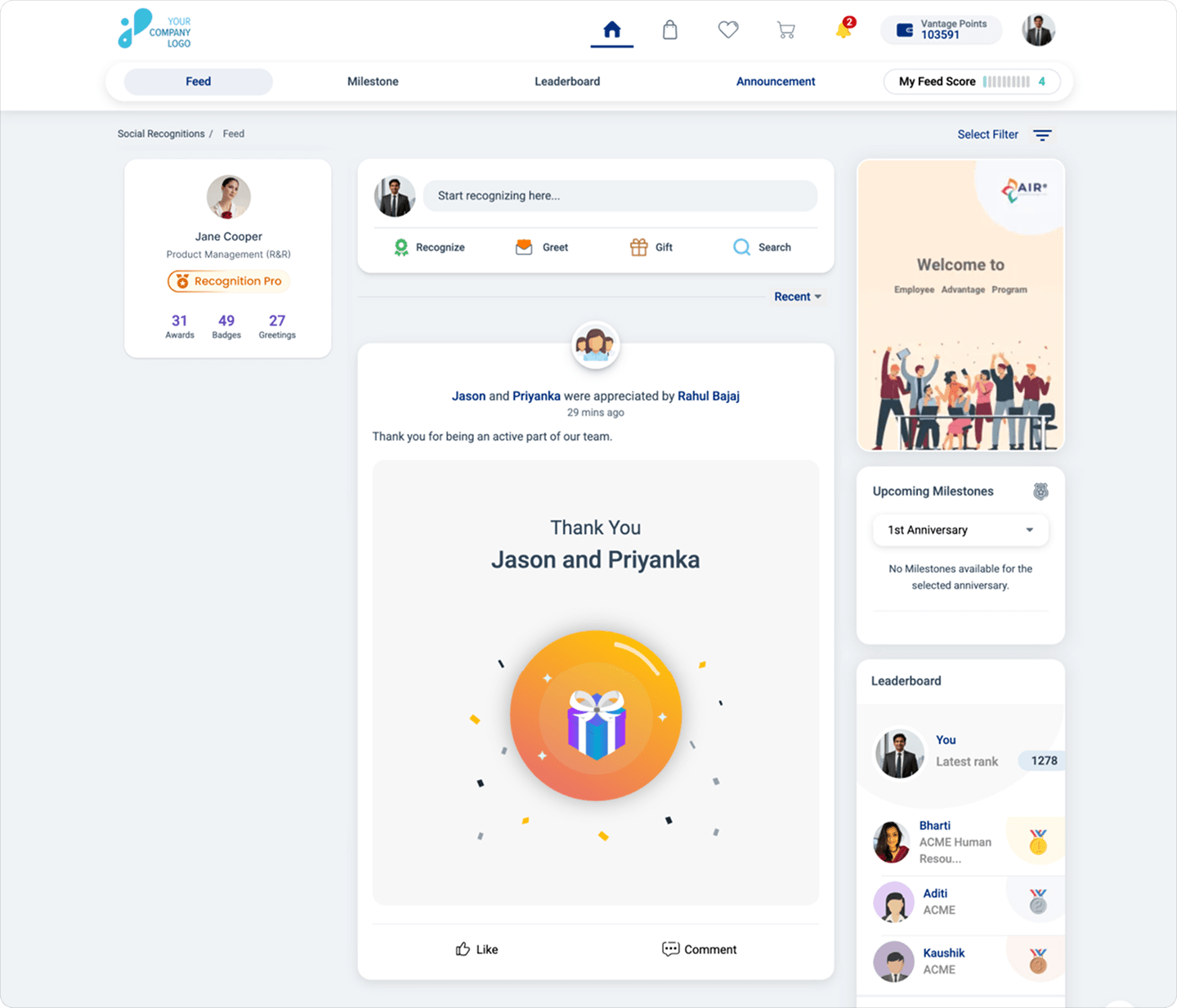
The Missing Data Point: Every generic productivity list treats focus as a pure willpower problem. It isn't. Organizations that replace annual feedback with continuous recognition, the kind built into structured programs like Vantage Circle's AIRe Framework, give employees more capacity to focus on what actually matters. Give employees that support and they put the extra capacity toward their actual priorities. Skip it, and they spend the same capacity patching around problems the organization never got around to fixing.
Protect Your Energy, Not Just Your Time
7. Build in real recovery, not just scheduled breaks. A break spent scrolling a phone doesn't restore focus the way a short walk or a few minutes away from screens does. Working smarter assumes you have the energy to focus in the first place, and that energy has to come from somewhere. A single wellness day once a quarter doesn't sustain that kind of energy through a demanding week. Ongoing support does. That's the logic behind Vantage Fit, Vantage Circle's corporate wellness platform, which turns everyday movement into a habit through recognized challenges rather than a one-off initiative that fades after launch.

8. Audit your recurring meetings every quarter. Recurring meetings default to staying on the calendar forever unless someone actively removes them. Once a quarter, go through every standing meeting you're on and ask whether it still needs to exist, still needs you specifically, or could be a shorter async update instead. A calendar that never gets audited only grows, and none of the strategies above hold up against one that keeps filling itself back in.
Real Examples of Working Smarter
In practice, working smarter usually just means doing fewer things, on purpose. The busiest person in the office is rarely the most useful one. Ask anyone who has watched a colleague reply-all to congratulate the team on an email that didn't need a reply. A few concrete examples:
- A sales rep blocks every morning for outbound calls and moves all internal meetings to the afternoon, so the highest-energy hours go to revenue-generating work instead of getting split across whatever lands on the calendar first.
- A manager replaces a recurring status meeting with a two-minute async written update, freeing up 30 minutes a week for every person on the team, time that adds up to a full extra workday per person over a year.
- A project lead turns down a "nice to have" side project to protect bandwidth for a launch already in progress, instead of quietly absorbing both and delivering neither one well.
- An operations analyst builds a reusable report template after writing the same summary from scratch for the third month running, cutting the task from two hours to twenty minutes and freeing that time for analysis instead of formatting.
- A customer support lead batches all ticket triage into two 45-minute windows a day instead of reacting to each new ticket as it arrives, which cuts response variance without adding headcount.
None of these examples involve working longer. Each one involves deciding, in advance, where effort should and shouldn't go, and then actually holding that line when something less important tries to jump the queue.
How Employers Can Help Their Teams Work Smarter
Individual effort only goes so far. Whether that effort compounds into real results or burns out depends heavily on the systems around an employee, recognition, workload, and wellness support included. An employer can't force someone to prioritize well, but it can remove a lot of the reasons prioritizing well is hard in the first place: unclear expectations, invisible effort, and a workload that never gets adjusted even after someone raises a hand.
Employees who feel invisible tend to spend energy chasing validation instead of spending it on priorities. Consistent peer-to-peer recognition removes that hidden tax on focus. Manager recognition matters just as much: saying no to low-value work only feels safe when a manager visibly values outcomes over hours logged, and recognition tied to results, not activity, makes that possible.
| What Helps Employees Work Smarter | How Vantage Circle Supports It |
|---|---|
| Feeling recognized for outcomes, not just hours logged | Peer-to-peer and manager recognition make it visible when someone's priorities paid off |
| Fewer distractions from financial stress | Vantage Perks reduces everyday financial pressure through corporate discounts and cashback |
| Energy that lasts through a demanding week | Vantage Fit wellness challenges support the physical energy that focus depends on |
| Visibility into what's actually working | Cross-product analytics link recognition and wellness activity to participation trends HR can act on |
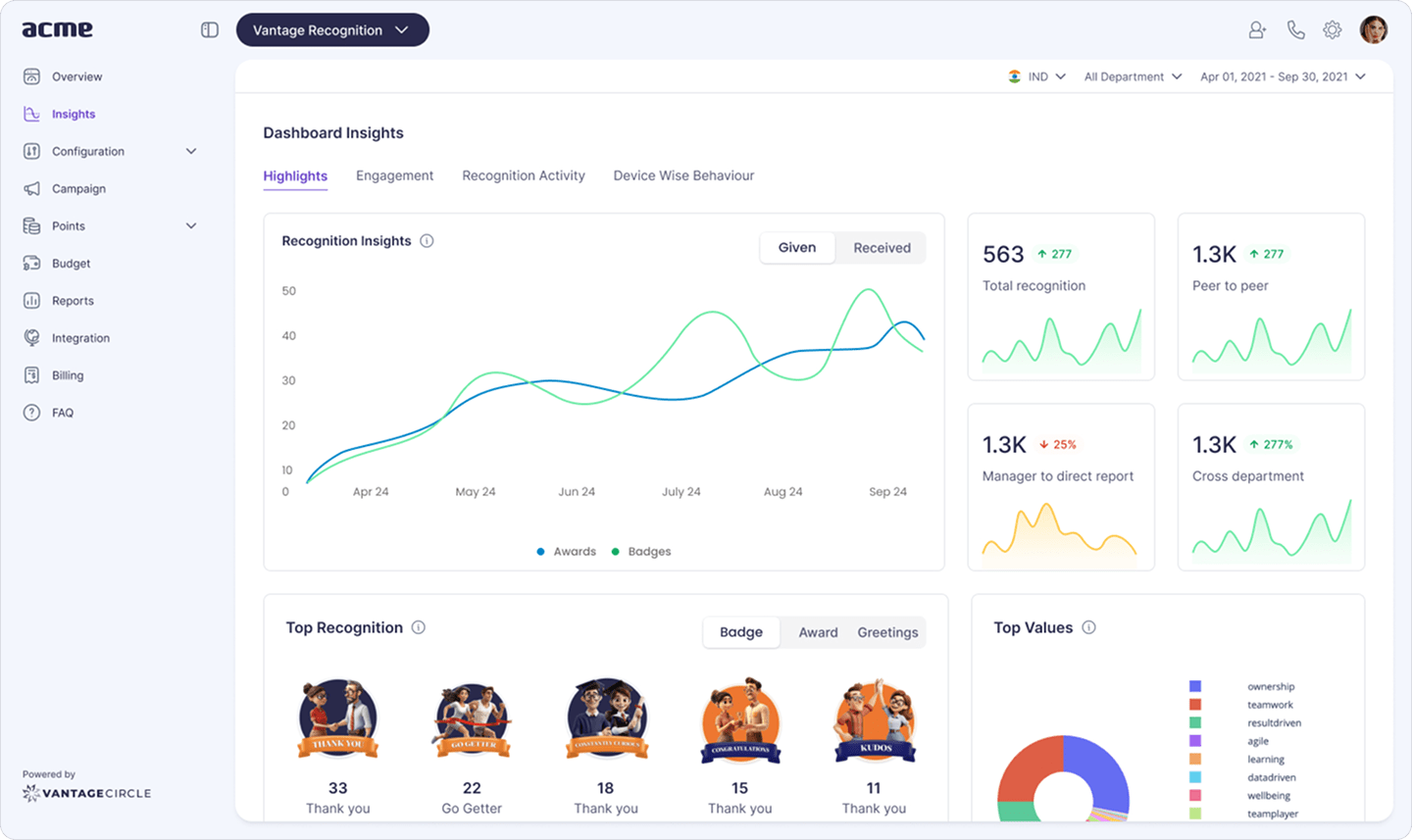
That last row matters more than it looks. Recognition only removes the "hidden tax on focus" if it's actually reaching people, not just the loudest or most visible ones on a team. Vantage Circle's recognition insights dashboard makes that visible: totals, peer-to-peer activity, and engagement trends broken down so a manager can see whether recognition is spread across the team or concentrated on the same two or three names every month.
Recognition only helps if there's still energy left to act on it, which is why wellness and recognition tend to move together: one shows people their effort is seen, the other makes sure they have enough left to keep giving it. That includes work-life balance: an employee who never disconnects eventually has nothing left to bring to the 20% of tasks that matter most.
None of this means individual habits don't matter. They do. But an organization that only talks about time management while ignoring recognition, workload, and wellness is asking people to work smarter with one hand tied behind their back.
Most companies can tell you how many hours their teams logged last quarter. Very few can tell you whether that time went toward priorities that actually moved the business forward, or whether recognition is reaching the people doing the work. HR teams that want to support smarter working, not just talk about it, need visibility into both.
FAQs About Smart Work
1. What does smarter working mean?
Smarter working means directing your time and energy toward the tasks that produce the most impact, instead of trying to do everything with equal effort. It's a skill that improves with practice, the way any skill does. You get better at spotting your own 20% the more you do it.
2. Is it better to work smarter or harder?
Effort and results don't scale together, so working smarter usually wins out over a long stretch of time. Two people can log the same hours and land in very different places, depending on whether that time went toward the tasks generating most of the results or got spread across everything else. Hard work still counts, but only once it's aimed at the right priorities; hours spent without that aim don't compound the way hours spent on high-impact work do.
3. What are some examples of smart working?
Common examples include time-blocking focused work, using templates for repeat tasks, automating recurring approvals, delegating low-value work, and saying no to requests that don't align with current priorities. None of these require extra hours. They simply redirect the hours already being spent toward higher-impact tasks.
4. What are the advantages of smarter working?
Working smarter reduces wasted effort, protects focus for high-impact tasks, and lowers the risk of burnout, since it relies on prioritization and systems rather than simply logging more hours. It also tends to make results more consistent, because output stops depending on how many hours someone can put in on a given week and starts depending on whether their time went to the right tasks in the first place.
Conclusion
Working smarter, not harder, comes down to a handful of deliberate choices: what to prioritize, when to focus, what to automate, and how to protect the energy that makes all of it possible. None of the 8 strategies here require working more hours. They require working on purpose, which is the one productivity hack no app has figured out how to automate yet. And they work best when the systems around you, recognition, workload, and wellness support, are set up to make that possible, not just left to individual willpower.
Start small if all 8 feels like too many at once. Pick one from each of the four categories: a single prioritization method, one change to how you handle interruptions, one task worth automating, and one boundary that protects your energy. Run those four for a month before adding more. Working smarter is a practice, not a one-time fix, and it compounds the same way good habits always do: slowly, then all at once.
For employers, the takeaway is similar. You don't need to overhaul recognition, workload management, and wellness support simultaneously. Start with whichever gap is costing the most focus right now, whether that's invisible effort going unrecognized, unclear priorities, or energy that never gets replenished, and build from there. The teams that pull this off usually don't have more tools than anyone else. What they have is habits and systems pointed the same direction, and the discipline to keep them that way.

Susmita Sarma is a Digital Marketer at Vantage Circle, making employee recognition less of a checkbox and more meaningful - helping organizations say we value our people and truly mean it.
Connect with Susmita on LinkedIn.


