
Congrats on the promotion! You're now officially responsible for a team with feelings, opinions, and an alarming ability to quit when they don't like their boss.
But here’s the plot twist, being great at one's job and being great at leading people are two completely different skill sets. And in today’s workplace, where teams are hybrid, attention is fragmented, and burnout is never far from the surface; leadership has become less about authority and more about influence.
Your team's success now depends on things they don't teach you in orientation. It's how you communicate when stakes are high, whether people trust you enough to tell the truth, or if your team feels safe admitting mistakes.
In this blog we’ll break down essential leadership skills with real-world examples
Whether you're a new team leader frantically Googling “how to manage people” at 11 PM, or a seasoned manager trying to stop losing your best employees to competitors. These skills will help you change how your team performs, and how much they actually like working for you.
So let's get started!
What Are Team Leader Skills?
Team leader skills are the practical abilities that let one person turn a group of individuals into a team that performs. Some are technical. Most are human. They cover how you talk, how you listen, how you decide, and how you make people want to do their best work for you rather than just enough to avoid trouble.
The 7 core skills of a leader
- Clear communication
- Active listening
- Delegation
- Decision-making
- Giving recognition and feedback
- Building trust
- Coaching
Essential Team Leader Skills at a Glance
Here are the 12 essential team leader skills, why each one matters, and one concrete way to improve it. Use this as a quick reference, then read the full breakdown below.
| Skill | Why It Matters | How to Improve It |
|---|---|---|
| Clear communication | Most "performance problems" are unclear instructions in disguise | End every meeting by naming who owns what, by when, in writing |
| Active listening | People follow leaders who make them feel heard, not just managed | Repeat back what you heard before you respond |
| Empathy | You cannot motivate someone whose situation you do not understand | Ask one question about the person before the task |
| Problem-solving | Teams stall when the leader cannot break a mess into next steps | Separate the symptom from the cause before proposing a fix |
| Giving recognition | Specific, timely praise is the cheapest retention tool you have | Recognize the behavior, not just the result, within 48 hours |
| Delegation | Hoarding work caps the team at your personal capacity | Assign the outcome, not the method, then step back |
| Decision-making | Indecision costs more than the occasional wrong call | Set a deadline for the decision, not just the work |
| Building trust | No skill compensates for a team that does not trust you | Do the small things you said you would do, every time |
| Psychological safety | People only flag risks early when speaking up is safe | Thank the person who brings you bad news first |
| Giving feedback | Vague praise and stored-up criticism both erode performance | Be specific, be timely, and separate the work from the worth |
| Coaching mindset | Solving everything yourself trains your team to need you | Ask "what would you try?" before you give the answer |
| Fairness and inclusion | Perceived favoritism quietly poisons effort across the team | Apply the same standard to your strongest and weakest performers |

Vantage Influencers Podcast
Coaching the next generation of leaders is how you turn inclusion into equity, belonging, and lasting retention.
Featuring Lindiwe Davis · Founder, FutureState Collective & Culture Coach, Google
Listen to the EpisodeThe 12 Team Leader Skills Explained
1Clear Communication›
What It Is
Clear communication is not about talking more. It’s about saying the right thing, to the right people, at the right time and making sure it sticks. It is when you give teams a clean line of sight between what leadership wants and what employees need to deliver.
Why It Matters
In the U.S. business environment, speed is everything. Markets shift, customers demand instant responses, and teams are expected to execute fast. Poor communication slows everything down. It creates rework, missed deadlines, quiet resentment, and decision paralysis.
Clear communication, on the other hand, builds operational rhythm. It keeps projects moving, reduces misunderstandings, and creates accountability without micromanagement.
Example Behavior
1. Set Expectations in Plain Language
Strong leaders don’t hide behind buzzwords or vague directives. They clearly define goals, deadlines, ownership, and success criteria so employees don’t have to guess what “good” looks like.
2. Repeat Key Priorities Consistently
High-performing leaders reinforce priorities across team meetings, one-on-ones, emails, and project updates. They understand that people are juggling dozens of inputs every day, and important messages compete with constant noise. Over time, this creates shared direction and prevents teams from drifting toward low-impact work.
3. Separate Urgency from Importance
When everything feels urgent, nothing actually is. Clear leaders are disciplined about labeling true priorities and protecting teams from artificial urgency. They avoid defaulting to “ASAP,” late-night messages, or constant last-minute pivots unless the situation genuinely demands it.
Recommended Read: Workplace Communication: 20 Tips and Strategies to Improve It
2Active Listening›
What it is
Active listening is about fully tuning in to what your team members are really saying, both verbally and non-verbally. It’s the discipline of paying full attention, asking better questions, and responding with intent.
Why it Matters
In today’s workplace, everyone is distracted, multitasking, or already formulating their response while the other person is still talking. Even the research shows that the average American listens with only about 25% effectiveness.
However, when you actively listen as a leader, you unlock critical information you'd otherwise miss. It gives you ground-level insight instead of relying solely on dashboards and performance reports. It also builds credibility. When employees feel heard, they’re more likely to buy into change, speak up about risks, and contribute ideas instead of keeping their heads down.
Example Behavior
1. Give Full Attention During Conversations
Active listening starts with presence. Strong leaders don’t “half-listen” while typing emails, checking Slack, or glancing at their phone. They pause what they’re doing, make eye contact, and create space for real conversation.
2. Ask Clarifying Questions Instead of Jumping to Conclusions
Great listeners resist the urge to immediately solve, judge, or react. Instead, they ask questions that uncover context:
- What’s causing the issue?
- How long has this been happening?
- Who else is impacted?
- What have you already tried?
This approach shifts conversations from surface-level complaints to root causes. It prevents leaders from treating symptoms while missing the real problem.
3. Respond Thoughtfully, Not Defensively
Not all feedback is comfortable. Strong leaders manage that discomfort with emotional discipline. Instead of shutting down, interrupting, or justifying themselves, they stay curious and composed.
This response builds psychological safety. When employees see that honesty isn’t punished, they become more willing to speak up, flag risks early, and offer ideas that improve performance.
3Empathy›
What it is
Empathy is your ability to step into someone else's shoes and genuinely understand what they're experiencing, not just intellectually, but emotionally. True empathy means recognizing real challenges and leading with awareness, fairness, and perspective
Why it Matters
According to Businessolver, 82% of employees would consider leaving their job for a more empathetic organization. That statistic explains why leaders who demonstrate empathy build trust faster.
They create environments where employees feel safe asking for help, admitting mistakes, and pushing back when expectations become unrealistic. It also drives performance by making people feel understood and supported.
Example Behavior
1. Acknowledge Challenges Without Minimizing Them
Empathetic leaders recognize workload pressure, burnout signals, and personal struggles without judgment. As a result, employees become more willing to flag risks early, ask for help before burnout hits, and have realistic conversations.
2. Handle Difficult Conversations With Respect
The goal isn’t to make someone feel small. It’s to help them improve. Instead of public call-outs, passive-aggressive comments, or blunt criticism, empathetic leaders address performance issues privately and constructively. They focus on behaviors, outcomes, and solutions rather than personal attacks.
3. Advocate for Team Well-being Upward
High-empathy leaders push back on unrealistic deadlines, challenge under-resourced projects, and speak up when expectations become unsustainable. They don’t quietly absorb pressure from the top and pass it downward.
Over time, it strengthens trust, reduces burnout, and creates healthier performance norms.
4Problem-Solving›
What it is
Problem-solving is the ability to identify an issue, understand what’s causing it, and find the best way to fix it. It means staying calm, thinking clearly, and taking smart action instead of reacting emotionally or ignoring the problem.
Why it Matters
A leader who can solve problems keeps teams moving forward, prevents small issues from becoming big ones, and helps employees feel supported instead of being stuck. Furthermore, it strengthens long-term performance and builds credibility.
Example Behavior
1. Focus on Root Causes, Not Symptoms
Strong leaders resist the temptation of surface-level fixes. When problems repeat, they dig deeper by examining workflows, communication gaps, and resource constraints that created the issue in the first place.
2. Involve the Team in Solutions
You cannot solve problems alone. That’s why you need to bring the right people into the conversation, especially those closest to the work. Frontline insight often reveals practical solutions leadership might overlook. This collaborative approach leads to better outcomes and stronger buy-in.
3. Stay Calm Under Pressure
Crisis test leadership temperament. Strong problem-solvers maintain composure when stakes are high. Instead of escalating panic, they create stability by focusing on facts, next steps, and priorities. When leaders stay steady, employees feel safer, and respond more effectively.
5Giving Recognition›
What it is
Giving recognition is not about occasional shout-outs or generic “great job” messages. It’s about going beyond surface-level praise and connecting recognition to specific contributions. When recognition is done well, it doesn’t just make people feel good. It makes expectations clear.
Why it Matters
What gets recognized gets repeated. When employees see that initiative, collaboration, and high performance are consistently acknowledged, they’re more likely to model those behaviors themselves.
Recognition also plays a direct role in retention and engagement. In the U.S. labor market, where employees have more mobility and higher expectations around appreciation, regular, meaningful recognition strengthens emotional commitment and reinforces employee loyalty.
Example Behavior
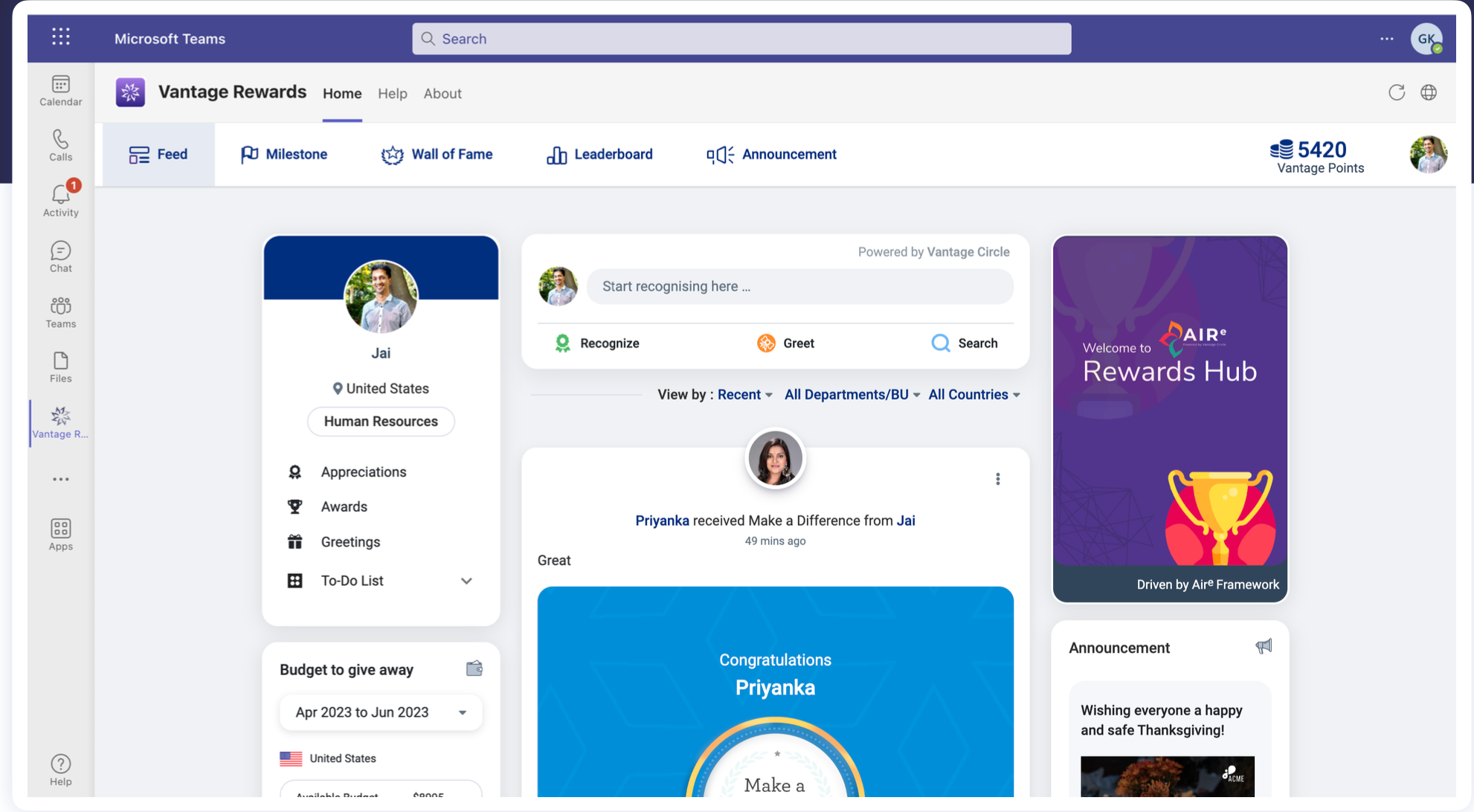
1. Make Recognition Timely and Specific
Effective recognition happens in the moment. When someone delivers exceptional work, you acknowledge it within days, not months. The work is still fresh in everyone's mind. That's when your recognition means something.
But timing alone isn't enough. Make recognition more specific. It will feel more authentic, build credibility, and reinforce the exact behaviors leaders want to see more often.
You can do it by weaving recognition into daily tools like Microsoft Teams. This will bring appreciation into the work-flow, making it timely, visible, and impossible to forget.
Source: Vantage Recognition
2. Personalize Appreciation Styles
Not everyone wants recognition the same way. Some employees thrive on public praise, while others may prefer a quiet thank-you. Strong leaders pay attention to these preferences and adjust their approach.
You can also take the help of R&R platforms to make personalization scalable. Leaders can match recognition to individual preferences, whether that means spotlighting achievements on a social feed, sending private appreciation messages, or offering reward points that employees can redeem in ways that matter to them.
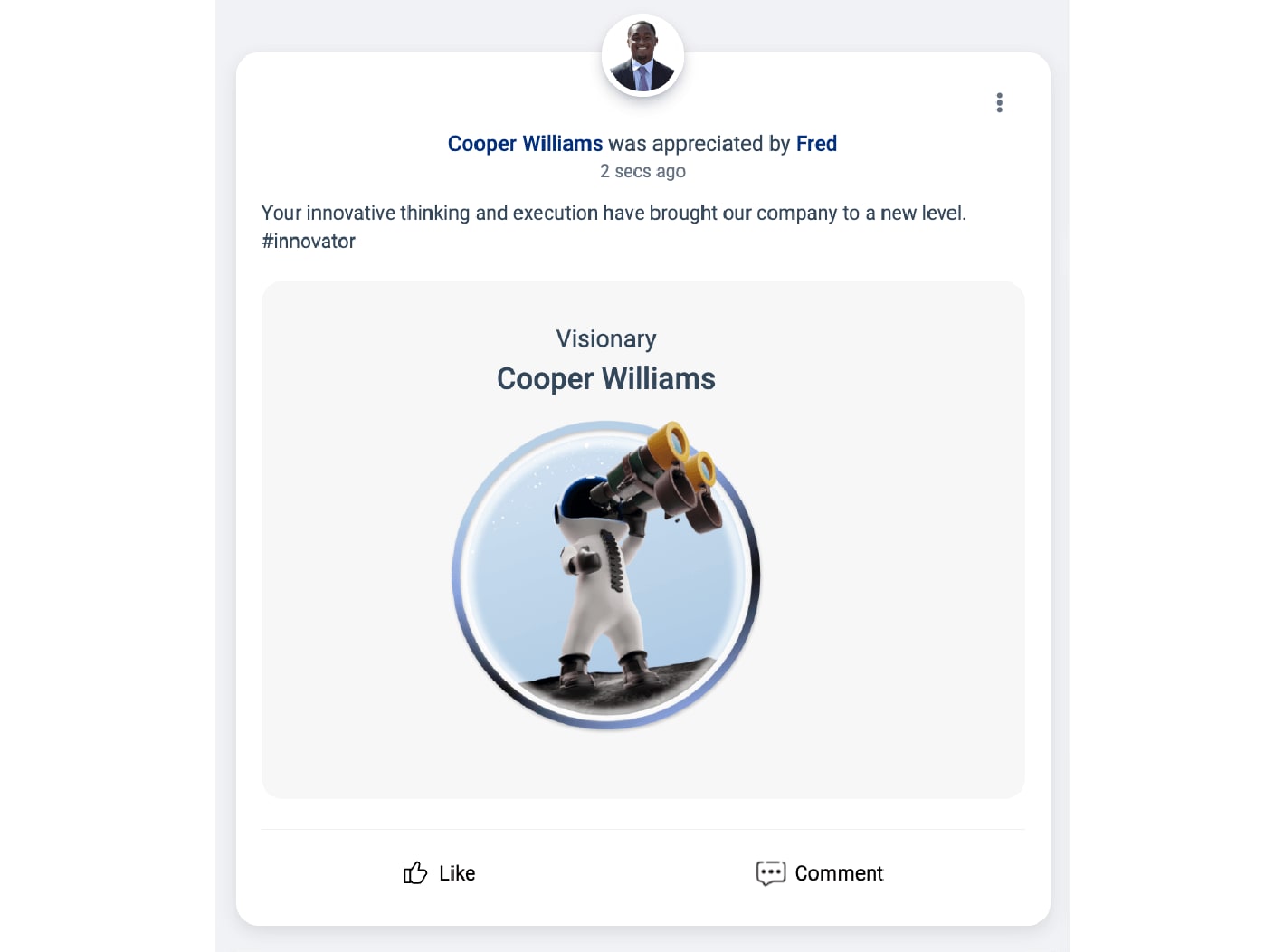
3. Encourage Peer to Peer Recognition
Don’t just rely solely on top-down praise. Strong leaders create systems and habits that encourage teammates to recognize each other. It could be through shout-outs in meetings, recognition platforms, or informal appreciation rituals.
Moreover, peer recognition strengthens trust, builds community, and reinforces shared ownership of success. It hits differently because your colleagues see the day-to-day effort leaders don’t always catch.
Source: Vantage Recognition
6Delegation›
What it is
Delegation is about sharing responsibility so teams can get more done without burnout or delays. Good leaders set clear expectations, give employees the power to make decisions, and trust them to solve problems.
Why it Matters
Leaders who don’t delegate become roadblocks. Work gets delayed, decisions stack up, and teams lose speed. Over time, employees disengage, not because they can’t do the job, but because they don’t feel trusted or fully used.
Example Behavior
1. Match Work to Capability and Growth Goals
Effective delegation isn’t random task distribution. It’s about assigning responsibilities based on both current skill level and future development potential. They stretch strong performers with new challenges and give emerging talent opportunities to build competence.
2. Provide Context and Authority
You need to share the reason behind the task, provide relevant background information, and clarify decision rights. Employees need to know what they can decide independently and when to escalate.
3. Stay Available Without Hovering
Great leaders don’t disappear after delegating, instead they stay involved without getting in the way. They check in at agreed milestones, offer guidance when asked, and remove roadblocks without taking control back. Over time, this reduces dependency and increases autonomy across the team.
7Decision-Making›
What it is
Decision-making is the process of making informed choices when there are multiple options. In simple terms, it means looking at the situation, picking the best possible action, and taking responsibility for the outcome.
Why it Matters
Slow decisions create operational drag. Projects stall. Teams lose focus. Opportunities pass by quietly while competitors move faster. Meanwhile, effective decision-making keeps organizations agile. It reduces ambiguity, accelerates execution, and gives teams confidence in leadership direction.
Example Behavior
1. Gather Diverse Input Before Deciding
Strong decision-makers actively seek perspectives from different roles, experience levels, and alternative viewpoints. This diversity of input leads to more balanced decisions and reduces the risk of groupthink. It also reveals practical realities that leaders might otherwise miss.
2. Balance Speed with Quality
Not every decision needs to be rushed. Good leaders know when to act fast and when to slow down to avoid costly mistakes. They balance speed and careful thinking, which helps the organization stay flexible without taking unnecessary risks.
3. Accept Responsibility for Outcomes
Strong leaders don’t hide behind committees, data, or advisors when decisions fall short. They own the result. This accountability strengthens credibility and sets the tone for ownership across the organization.
8Building Trust›
What it is
Building trust as a leader is about being consistent and honest in everyday actions that prove you're reliable. It is built by showing up when you say you will, following through on commitments, admitting when you're wrong, and demonstrating through your actions.
Why it Matters
Without trust, nothing else works. Even the data backs this up powerfully. Research shows that high-trust companies outperform low-trust companies by 286% in total return to shareholders.
When trust exists, everything moves faster. Decisions get made more quickly, problems get solved faster, and innovation happens more readily because people feel safe taking risks without fear of being blamed.
Example Behavior
1. Own Mistakes Publicly, Correct them Quickly
Trust grows when leaders don’t play the blame game. When something goes wrong, credible leaders step up, take responsibility, and focus on fixing the issue instead of protecting their image.
2. Share Context, Not Just Instructions
Trusted leaders don’t operate behind closed doors. They explain the reason behind decisions, business trade-offs, and shifting priorities. When employees understand the reasoning, they’re more likely to buy into the direction instead of feeling managed from a distance.
3. Protect Your Team in High-pressure Moments
Don’t use your teams as shields when pressure comes from above. When deadlines slip or projects go sideways, team leaders should step forward, not back down. They should take responsibility in executive rooms and handle course corrections privately with their teams.
9Psychological Safety›
What it is
Psychological safety is when employees feel safe to speak up, share ideas, ask questions, and admit mistakes without fear of being judged or punished.
However, it doesn’t mean lowering standards or avoiding accountability. It means separating human dignity from performance outcomes.
Why it Matters
Psychological safety matters because it helps employees speak up, share ideas, and raise concerns without fear. It enables faster learning cycles, stronger collaboration, and more resilient performance. It also allows teams to course-correct early instead of scrambling late.
Example Behavior
1. Normalize Speaking Up
Psychologically safe leaders actively invite questions, opposing views, and alternative ideas. They ask for input in meetings, pause to create space for quieter voices, and explicitly state that disagreement is welcome.
Over time, teams become more honest, more creative, and more willing to surface risks before they become costly mistakes.
2. Credit Ideas Publicly
Leaders who build psychologically safe environments make recognition visible. They call out contributions in meetings, emails, and leadership forums. They avoid repackaging team ideas as their own and make sure the right people get credit for wins.
3. Model Vulnerability
Leaders who admit uncertainty or mistakes create space for others to do the same. This vulnerability doesn’t weaken authority. It humanizes leadership and builds trust. When leaders model openness, teams become more willing to experiment, ask for help, and grow together.
10Giving Feedback›
What it is
Giving feedback is an ongoing leadership practice focused on alignment, improvement, and growth. Strong leaders treat feedback as a real-time tool, not an annual exercise.
Furthermore, they connect behavior to outcomes and provides clear direction on what to continue, adjust, or stop.
Why it Matters
Consistent feedback improves execution speed and quality. It helps teams course-correct early instead of waiting for formal review cycles.
Without feedback, employees operate in the dark. They don’t know what’s working, what isn’t, or how close they are to expectations. That uncertainty creates disengagement and stalls performance.
Example Behavior
1. Deliver Feedback in Real-time
High-impact leaders don’t save feedback for annual reviews. They address performance close to the moment it happens, while context is fresh and behavior is easier to adjust.
Timely feedback keeps expectations clear and prevents small issues from becoming major performance gaps. It also reinforces positive behavior when it matters most.
2. Balance Praise with Development Guidance
Effective leaders recognize what’s working while also addressing what needs improvement. They reinforce strengths and connect feedback to growth opportunities rather than framing it as punishment. This balanced approach keeps morale high while maintaining performance standards.
3. Follow up on Progress
Great leaders don’t drop feedback and disappear. They check in, offer support, and recognize improvement. This follow-up shows commitment to development—not just evaluation.
When leaders reinforce progress, accountability strengthens and momentum builds. Feedback becomes part of ongoing growth instead of a one-time event.
11Coaching Mindset›
What it is
A coaching mindset is when a leader focuses on helping employees learn, grow, and improve instead of just giving orders. It means guiding, asking questions, and supporting people so they can build skills and succeed on their own.
Why it Matters
A coaching mindset builds long-term performance. It helps employees develop problem-solving skills, decision-making confidence, and leadership potential. In a U.S. labor market where career development strongly influences retention, coaching also signals investment in people, and not just outcomes.
Example Behavior
1. Ask Guiding Questions Instead of Giving Quick Answers
Coaching leaders resist the impulse to immediately provide solutions. Instead, they ask questions that help employees think critically: What options have you considered? What’s the risk? What would success look like?
This approach builds problem-solving capability. Over time, employees become more independent, confident, and capable of handling complex challenges without constant direction.
2. Focus on Long-term Growth, Not Short-term Fixes
Strong coaches invest time in developing skills, discussing career goals, and building capabilities that pay off over months and years. This long-term focus creates stronger talent pipelines and higher retention.
3. Create Regular One-on-one Touchpoints
Strong leaders schedule consistent one-on-one meetings that go beyond project status updates. They use this time to discuss goals, challenges, workload, and progress. These regular check-ins build trust and allow issues to be addressed early.
12Fairness & Inclusion›
What it is
Fairness & Inclusion is the practice of creating a workplace where opportunities, recognition, and decision-making are based on merit and transparency, not favoritism.
Fairness ensures that rules, expectations, rewards, and accountability are applied consistently across the organization. While inclusion goes beyond representation. It makes sure that the voices of the diverse people are heard, considered, and respected.
Why it Matters
Fairness and inclusion matter because they determine whether employees trust the system they work in. When people believe opportunities, recognition, and advancement are based on merit rather than biasness, they’re more willing to take ownership, and stay committed. Without fairness, even the best engagement initiatives can fall flat.
Example Behavior
1. Ensure Equal Access to Opportunities
Be intentional about how opportunities are distributed. Don’t default to the same familiar faces for high-visibility projects, stretch assignments, or leadership exposure. Instead, rotate opportunities. This approach expands the talent pipeline and prevents “hidden potential” from being overlooked.
2. Invite Diverse Voices into Decisions
Inclusive leadership requires actively bringing quieter team members and underrepresented voices into the conversation. Strong leaders ask for input directly, create structured opportunities to contribute, and avoid letting the loudest voices dominate.
3. Build Inclusive Meeting and Collaboration Norms
Design environments where participation is the default. Set clear meeting norms, encourage balanced airtime, respect different communication styles, and use tools like structured agendas or round-robin discussions to prevent dominance by a few voices.
How to Improve Your Team Leader Skills
You improve team leader skills the same way you improve any skill. And that is through deliberate practice, honest feedback, and time. Reading about them is the easy part. But we are here with a practical way to actually build them.
1. Pick one skill, not twelve
Trying to fix everything at once fixes nothing. Choose the one skill that, if improved, would help your team most this quarter, and focus there.
2. Ask for feedback you can act on
Ask your team and your peers one specific question: "What is one thing I could do differently as a leader?" Then listen without defending. The answers are your roadmap.
3. Find a mentor or a model
Pick a leader you respect and pay attention to what they actually do, not just what they say. Borrow shamelessly. Most leadership is learned by watching.
4. Practice in low-stakes moments
Do not save a new skill for the high-pressure meeting. Practice delegation on a small project, or feedback on a minor win, where the cost of getting it slightly wrong is low.
5. Measure whether it is working
Skill development is invisible without a signal. Track team engagement, how often people bring you problems early, how your one-on-ones feel. If nothing changes, adjust.
6. Protect your own capacity
A burned-out leader has no skills, only reflexes. Model the balance you want your team to keep, and treat your wellbeing as part of the job rather than a reward for finishing it.
Conclusion
Leadership is hard. But that doesn’t mean you can’t be great at it. Pick one that addresses your team's biggest pain point right now and practice it. It could be giving specific recognition instead of generic praise or following through every commitment, no matter how small. Remember, leadership isn't about perfection, it's about intentional progress.
FAQs
1. What Skills are needed for a Team Leader?
A team leader needs strong communication, decision-making, emotional intelligence, problem-solving, and delegation skills. They should also be able to motivate employees, manage conflicts, and guide the team toward shared goals.
2. What are the 7 Core Skills of a Leader?
The 7 core skills of a leader include clear communication, active listening, delegation, decision-making, building trust and giving recognition & feedback.
3. What are the 5 Qualities of a Good Team Leader?
A good team leader is trustworthy, empathetic, accountable, confident, and supportive. These qualities help build strong relationships, encourage collaboration, and create a positive team culture.
4. What are the Top 3 Leadership Skills?
The three most important leadership skills are communication, emotional intelligence, and decision-making.
5. What are some Good Team Leader Skills?
Good team leader skills include active listening, conflict resolution, time management, delegation, coaching, adaptability, and recognition.

Shikha Gogoi is a Content Marketing Specialist focused on SEO-driven content around employee engagement, recognition, and workplace culture, helping build people-first workplaces.
Connect with Shikha on LinkedIn.


