










Intrinsic Motivation in the Workplace: A Strategic Guide

A Global Employee Recognition and Wellness Platform
Most managers don’t think of themselves as demotivating anyone. In fact, many believe they’re doing everything right - setting the right goals, tracking progress, rewarding performance, and doing everything on time.
And yet, employee motivation keeps slipping. Not in dramatic ways, of course. People still show up. Work still gets done. Deadlines are met.
But something subtle changes. Like they stop sharing ideas as they used to. Curiosity turns into compliance. Efficiency replaces energy. Basically, people complete their tasks but stop owning them. They tend to work simply for the paycheck, not because the work excites or challenges them.
And this isn’t just a feeling. It’s a measurable pattern showing across workplaces worldwide. According to Gallup’s State of the Global Workplace 2025 report, only about 21% of employees worldwide are engaged in their work. It means a vast majority are either checked out mentally or simply going through the motions.
When disengagement spreads at this scale, the cost shows everywhere: in slower decisions, fewer ideas, and weaker performance over time. Interestingly, what’s disappearing here isn’t effort. And it’s rarely about pay or perks.
It’s about something far more invisible - intrinsic motivation in the workplace.
And once it fades, no number of incentives can fully bring it back.
What Is Intrinsic Motivation in the Workplace?
Intrinsic motivation is actually very simple but is frequently misconstrued. Let me make this clear.
An intrinsically motivated employee works for the enthusiasm and challenge involved, rather than the external benefits. Here, the reward is the opportunities that employees get to learn, grow, and use their potential.
In other words, intrinsically motivated people do the work for the inherent reason that the work is valuable enough to do even when nobody is paying attention and no reward is given. It is done purely out of a sense of ownership.
It’s there in an employee who rewrites an article late at night, not because it was requested, but because it did not feel just right yet. It is evident in the colleague who takes up a new skill just for the sheer fact that they want to be good at what they do.
That's what we call intrinsic motivation. And it is fragile. But undoubtedly, it is a more vibrant and more in-depth concept compared to extrinsic motivation.
Why Intrinsic Motivation Is So Easy to Lose?
The uncomfortable truth is that most organizations don’t set out to kill intrinsic motivation. They simply wear it down. It fades through constant interruptions, shifting priorities, transactional recognition, and goals that obsess over numbers while ignoring meaning.
What happens next is, people stop asking: “How can I do this better?”
And start asking: “What’s the minimum required?”
That shift is subtle. But it changes everything in the workplace.
Gallup’s data suggests that declining intrinsic motivation- reflected in low engagement and reduced discretionary effort, contributed to roughly $438 billion in lost global productivity in 2024.
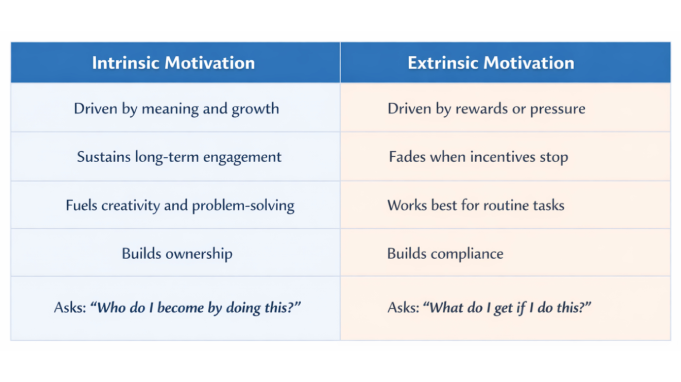
Intrinsic vs. Extrinsic Motivation: Why the Difference Matters?
Extrinsic motivation is familiar. It’s visible and measurable. Like bonuses, promotions, targets, ratings, etc.
Intrinsic motivation is quieter, but far more powerful for modern work.
Let’s look the differences below:
The 3 Pillars of Intrinsic Motivation
Across decades of research, three needs consistently show up wherever intrinsic motivation thrives:
1. Autonomy
Autonomy gives people ownership over their work. When employees have discretion in how they approach tasks, effort becomes self-directed rather than imposed. Without autonomy, people wait for instructions, comply, and expend minimal energy. Thus, motivation becomes externally controlled.
2. Mastery
Mastery ensures effort leads to growth. When people see their skills, judgment, or problem-solving improve, work feels intrinsically rewarding. Without opportunities to learn or progress, effort feels wasted, work becomes repetitive, and motivation slowly erodes, even in roles that matter.
3. Purpose
Purpose connects effort to impact. When people understand how their work contributes to outcomes that matter beyond themselves, effort feels justified and meaningful. Without purpose, work may still get done, but only because of pressure or incentives. Thus, motivation remains extrinsic.
Why Intrinsic Motivation Matters for Knowledge Workers
For knowledge workers like designers, engineers, marketers, analysts, motivation responds differently to pressure. While deadlines may boost short-term output, they rarely sustain high performance. What truly fuels motivation for them is steady progress on meaningful work.
Because of this, the most effective way to unlock intrinsic motivation is to remove obstacles that slow progress. Frictions such as unnecessary meetings, excessive approvals, and constantly shifting priorities breaks momentum. When momentum breaks, motivation drops. When work flows smoothly, motivation naturally follows.
To be brief, most motivational issues in creative roles aren’t about mindset or work ethics. They’re about systems that interrupt progress.
Meetings are one of the biggest drains on meaningful work. In a global survey of 5,000 knowledge workers, 78% said they’re expected to attend so many meetings that it’s hard to get their work done, and 51% reported working overtime just to catch up because of meeting overload.
Intrinsic Motivation Factors & the 4 C’s Model
A useful way to think about intrinsic motivation is through four recurring drivers:
-
Curiosity: the desire to explore and understand
-
Challenge: work that stretches skills without overwhelming
-
Control: autonomy in how work is done
-
Context / Commitment: clarity on why the work matters
When even one of these is missing, employee engagement starts to dip. When all of them disappear, people slowly stop investing emotionally in their roles.
How to Increase Intrinsic Motivation (6 Research-Backed Strategies)
1) Give Autonomy Without Abandonment
At companies like Google and 3M, engineers were encouraged to spend part of their workweek free from rigid task assignments and picking projects they personally cared about. At Google, this “20% time” led to Gmail and Google News - innovations that wouldn’t have happened if engineers had only followed top-down directives.
This kind of autonomy didn’t mean leaders disappeared. Rather, they set clear goals and then trusted the team with how to reach them, reducing the urge to work just for approval and instead fueling pride in ownership. Source
2) Design Meaningful Challenge Not Constant Pressure
Atlassian’s Quarterly ShipIt Days are when teams get to work on anything they like for the whole day. They arrive at work excitedly and are not tired because it's something they get to choose, and it isn't something that is constantly pushing them.
3) Recognition That Reinforces Growth
Instead of praise like “Good job hitting the target,” managers at Adobe talk about how someone’s thinking has evolved or which new skills they applied. That subtle change signals that efforts aren’t just rewarded; growth itself is recognized. After this shift, Adobe saw voluntary attrition drop significantly and engagement rise.
There are several recognition platforms that help organizations operationalize this kind of growth-focused recognition. With features like Peer-to-peer recognition, employee development can be tracked and reinforced continuously, not only when a manager happens to remember during reviews.
4) Anchor Work to Purpose
At Zappos, the very mission isn’t just “sell shoes.” It’s “deliver happiness.” Employees aren’t left to guess why their work matters; they see how everyday tasks connect to a bigger impact on customers and culture. That clarity of purpose makes daily effort feel worthwhile instead of merely transactional, which is exactly what intrinsic motivation depends on. Source
5) Invest in Mentorship, Not Just Management
Google has an “Googler-to-Googler” (g2g) program where employees can coach and mentor each other from different teams. Google’s internal survey has actually shown that almost all g2g participants feel that they have not only improved but also boosted their confidence and learning outcomes because of having had this one learning experience with mentorship. It surely impacts their intrinsic motivation by increasing their competence and autonomy.
6) Make Learning Non-Negotiable
At Deloitte, the Greenhouse program places employees in immersive workshops where they solve real business problems and practice new ways of thinking. Learning is not treated as optional training but as part of how work gets done. According to Deloitte, participants in Greenhouse experiences report up to a 40% increase in employee engagement and teams show a 20% improvement in productivity after applying what they learned. By making continuous learning unavoidable and experiential, Deloitte strengthens employees’ sense of competence and growth, which directly fuels intrinsic motivation.
Why This Works (in an organic way) ?
Across industries and studies, intrinsic motivation rises when workplaces:
-
Trust people to steer their own work: autonomy becomes a source of engagement, not chaos.
-
Let progress be visible and personal: whether through innovation sprints or self-directed time blocks.
-
Reward development, not just outcomes: fostering competence and mastery.
-
Connect daily tasks to a mission people can feel: purpose deepens commitment.
-
Support people beyond metrics: mentoring and learning cultivate sustainable motivation.
Common Misconceptions About Intrinsic Motivation
1) If people are intrinsically motivated, they do not need feedback
They do. Intrinsic motivation grows when people can see whether they are getting better. Without feedback, even meaningful work starts to feel directionless.
2) Intrinsic motivation is automatic if the work is interesting
It is not. Even exciting work can become demotivating if tasks are repetitive, unclear, or poorly structured. Enjoyment alone does not sustain engagement.
3) Intrinsic motivation is fragile and disappears under pressure
It usually disappears because pressure is paired with control. When pressure exists with trust and autonomy, motivation often strengthens instead of collapsing.
Manager’s Playbook: Practical Audits That Actually Change Motivation
Employees do not disengage because they do not care. They disengage because busyness slowly replaces intention. Motivation leaks quietly and often go unnoticed. The goal is not to do more but to notice where it is disappearing.
1. Autonomy Audit: Who Really Owns the Work
Tasks may be assigned, but employees often wait for approval at every step. Ask yourself who decides how work is done. If people need permission for every move, they stop taking initiative and do only what is asked.
2. Progress Audit: Can People See Forward Motion
People don’t need praise every day. They need evidence that their effort is leading somewhere. Milestones and small wins make progress visible. When progress disappears, even important work starts to feel pointless.
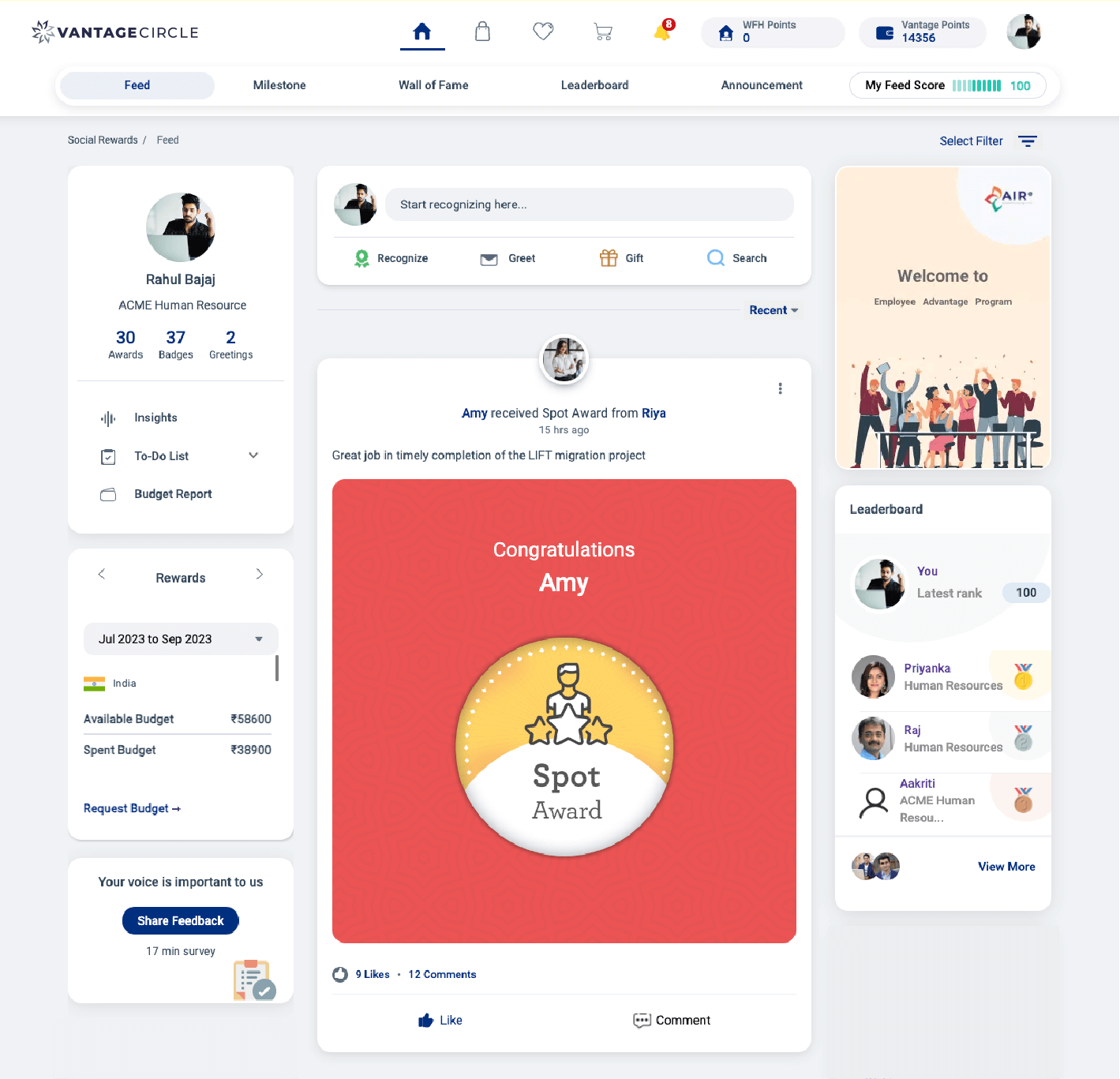
Employee milestone features like Vantage Circle’s do exactly this. They make progress tangible. By marking moments like work anniversaries and achievements, they help employees see forward motion over time. Not as noise or applause, but as proof that effort is accumulating. And when progress is visible, motivation sustains itself.
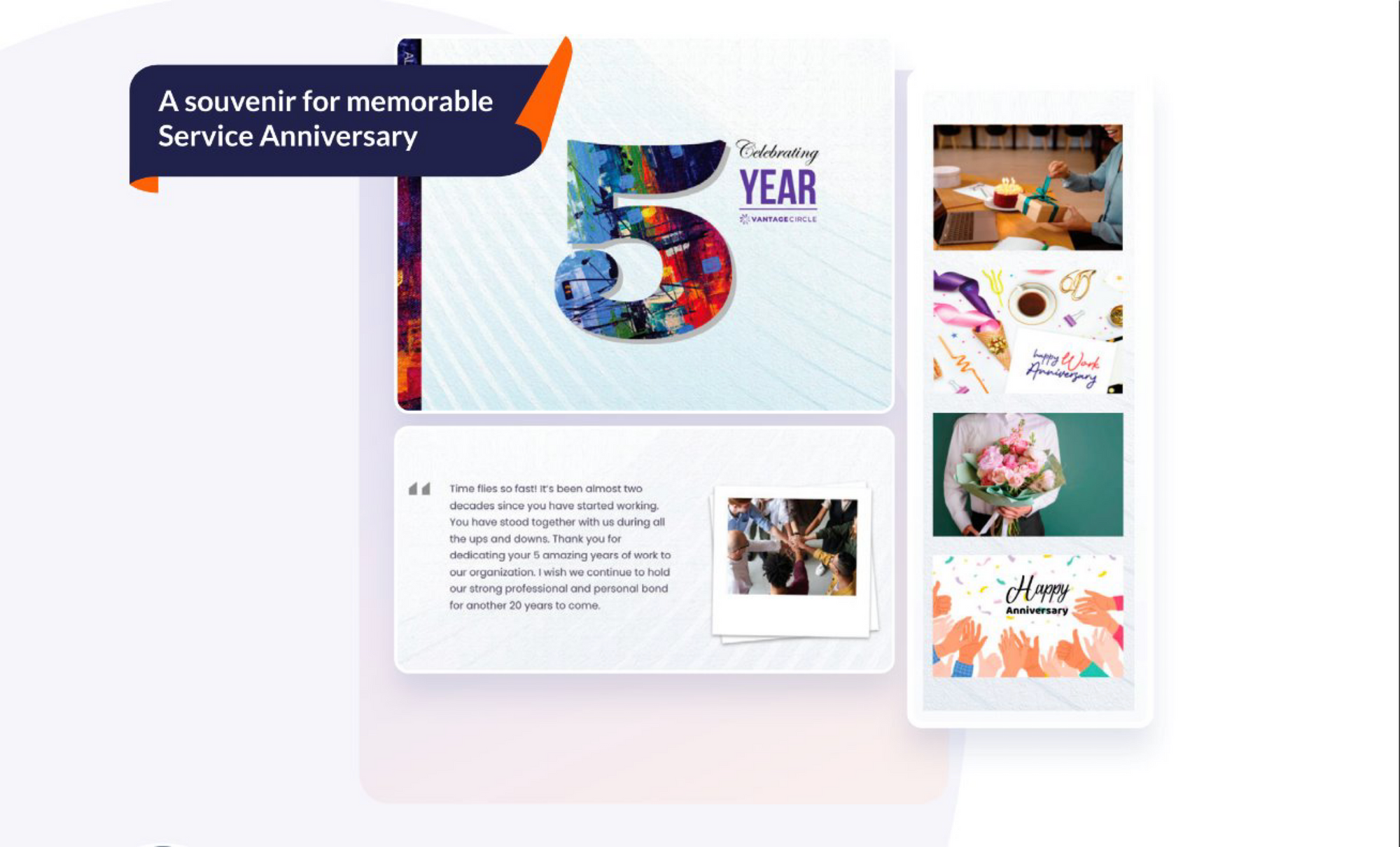
Read our blog on: 30 Classy Ways To Celebrate Work Anniversaries (Remote and In-Person!)
3. Friction Audit: What Slows People Down
Look for hidden obstacles. Too many meetings, unclear priorities, overlapping approvals, and constant interruptions drain energy. People work harder but feel like they are moving in place. Removing friction restores both speed and motivation.
4. Learning Audit: Is Growth Real or Just Talk
Learning only fuels motivation when it is visible, protected, and safe. If mistakes quietly carry penalties, learning time is the first thing to disappear under pressure, and experimentation is treated as risk rather than progress; people stop stretching. And once that happens, intrinsic motivation fades soon afetr.
5. Calendar Audit: Follow the Time, Not the Talk
Your calendar is the most honest indicator of what you care about. If development keeps getting pushed “to next time” while delivery always finds a slot, teams learn exactly what wins.
Thus remember, your people don’t ignore growth because they don’t want it. They ignore it because the calendar says it doesn’t matter.
Closing Thoughts
Intrinsic motivation is not something you can hand out in a memo or a meeting. It is invisible and leaking in ways you might not even notice. Your team is showing up every day, putting in effort, solving problems, and still silently checking out because the environment slowly drains their drive.
The most important question you must ask yourself is: If someone on your team stopped trying tomorrow, would you even notice before it slows the whole company? And what would you change if you could spot the cracks today?

Susmita Sarma is a seasoned Digital Marketer at Vantage Circle, specializing in content strategy, employer branding, and HR thought leadership. Passionate about creating recognition-driven and people-first workplace cultures, she blends data, storytelling, and empathy to drive meaningful engagement. Connect with Susmita on Linkedin or reach out at editor@vantagecircle.com for inquiries.