Developing Talent In Your Organization
Episode Overview
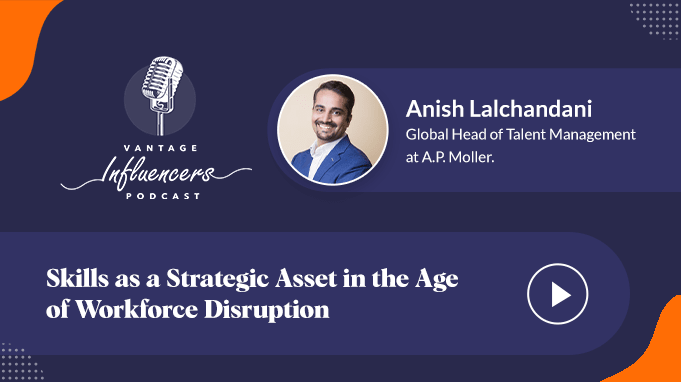
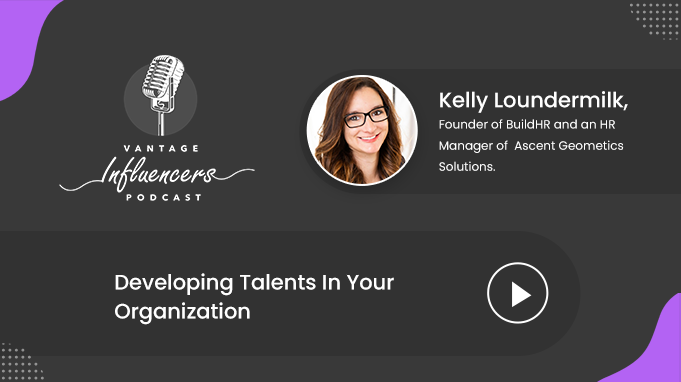
In this episode of the Vantage HR Influencers Podcast, host Rohit speaks with Kelly Loudermilk, founder of BuildHR and HR Manager at Ascent Geomatics Solutions, about how organizations can develop and hold on to their best people even when budgets are tight. Kelly describes her own path into HR as an accident: a temporary assignment covering a colleague's maternity leave at the manufacturing firm Hilti grew into leading national recruiting for the company, and a chance talk at a local rotary club later launched the consulting career that became BuildHR. That accidental start shaped her belief that HR works best when it stays close to people rather than process.
The sharpest point in the conversation is Kelly's argument that retention on a tight budget starts with Maslow's Hierarchy of Needs, not with perks. She contends that once basic physical needs are covered, what keeps people from leaving is psychological safety and human connection: being listened to, being treated as a person going through a hard time rather than a line on a budget sheet, and knowing leadership actually understands what they're dealing with. From there, she extends the same human-first thinking to building high performers, opening access to critical roles, and running a healthy remote workforce on radical transparency and inexpensive, frequent connection rather than big one-off spends.
Episode Highlights
- Kelly frames talent retention through Maslow's Hierarchy of Needs, arguing that companies on tight budgets should meet employees' basic psychological and safety needs before chasing perks or bonuses.
- She recommends open, unstructured workshops and conversations to define or redefine company culture, especially during a crisis, rather than treating culture as a fixed document.
- Building high performers, in her view, comes from standardizing expectations and publicly reinforcing the behaviors leaders want to see, which raises the bar for everyone else.
- On access to critical roles, she favors a blended approach: keep opportunities open to all while giving proven high performers a faster path, paired with honest conversations for those who aren't ready yet.
- She argues every role should shift toward outcome-based measurement rather than hours logged, since remote work has already shown that input and output don't always correlate.
- Kelly ties remote productivity to radical transparency, noting that ambiguity pushes people toward worst-case assumptions, while frequent, low-cost check-ins, even lighthearted ones, build connection cheaply.
About the Guest
Kelly Loudermilk, Founder, BuildHR; HR Manager, Ascent Geomatics Solutions
Kelly Loudermilk has ten years of experience in HR as founder of BuildHR and HR Manager of Ascent Geomatics Solutions. She holds a Masters of Science in Employment & Labor Law, is a member of the Society of Human Resource Management (SHRM) National and SHRM MileHigh, belongs to the Association for Talent Development (ATD), volunteers with SCORE Mentoring for Small Business Owners, and is SHRM-SCP & Talent Optimization Certified.
Connect with Kelly on LinkedIn
Host
Rohit, Vantage Influencers Podcast Host
What You Will Learn
- How to apply Maslow's Hierarchy of Needs to design a retention strategy that works even on a frozen budget.
- Practical ways to open honest, informal conversations that define or refresh company culture during uncertain times.
- How standardizing and publicly reinforcing high-performer behaviors raises expectations across an entire team.
- A framework for deciding who gets access to critical roles without shutting out employees who haven't proven themselves yet.
- Why shifting from hours-based to outcome-based performance measurement matters for remote and hybrid teams.
- How transparent, frequent communication keeps productivity and psychological safety high when teams can't meet in person.
Key Topics & Timestamps
| Timestamp | Topic |
|---|---|
| 0:10 | Introduction to Kelly Loudermilk |
| 0:29 | Kelly's accidental entry into HR |
| 2:30 | Retaining talent on a tight budget |
| 4:19 | Defining and prioritizing culture during a crisis |
| 6:08 | Building high performers systematically |
| 8:10 | Equal opportunity versus performance-based access to critical roles |
| 10:20 | The future of remote work |
| 12:52 | Balancing budgets and activities for remote teams |
| 15:53 | Tracking productivity and performance remotely |
| 18:15 | Overview of BuildHR and HR On Demand |
| 19:53 | Kelly's favorite business book |
| 21:10 | HR leaders and thinkers Kelly follows |
| 22:25 | Advice for young HR leaders |
Full Transcript
Click to read the full episode transcript
Welcome to the Vantage HR Influencers Podcast. This podcast is sponsored by Vantage Circle, the leading employee benefits and engagement platform.
Rohit: Hi everyone, this is Rohit with the Vantage HR Influencers Podcast, and today I'm excited to have Kelly Loudermilk, who has more than ten years of experience in HR and is the founder of BuildHR, as well as HR Manager at Ascent Geomatics Solutions. Welcome to the show, Kelly.
Kelly Loudermilk: Thank you so much for having me.
Rohit: Awesome. So, I want to go ahead and ask: how did you get started in HR, and what got you excited about the field?
Kelly Loudermilk: So it's kind of funny because most people who fell into HR will always say that it wasn't on purpose, it was an accident. I got into HR when I worked for a major international manufacturing firm, Hilti, and my manager, I think it was a national recruiting manager for all of the United States that covered about 13,000 positions, went out on maternity leave, and they said, well, we're going to put you in her role until she comes back. So I went from an entry-level internship role to really spearheading all of the national recruiting and dealing with internships both nationally and internationally for them. Luckily, I got a lot of training there, but that's essentially how I got started. I started in recruiting, and when I spoke locally at a rotary club, it kind of launched my career more on the HR side, because small businesses started approaching me for projects of their own. And what really excites me is finding ways to innovate how you work with people. They say that coffee is one of the largest trade commodities on the planet, and I like to joke that in a way, people are too, because they're doing jobs, they're trading jobs, and it's a very unpredictable area to be in when it comes to business. So I really love figuring out how to innovate that, to make it so it's not such a chore, because work is where we spend most of our time.
Rohit: Absolutely. It's really interesting to hear about your journey and how you got started. So, how can a company retain talent when budgets are tight, especially right now during COVID, when almost every leader is struggling to hold on to their talent and still wants to retain and grow it inside the company?
Kelly Loudermilk: Yeah, that's a very trending topic right now. Everybody's budgets have been cut, sales are down, and so on, and we want to keep the people we have, especially those rock star employees. I really feel that people just want a human on their side, right? They don't want to feel like they're part of a system. They want to know that whoever they're working for understands what they may be going through, whether that's mental, emotional, or even physical, like getting sick. So I think it's really about bringing it back to the basics of Maslow's hierarchy of needs. It's a very popular theory across the board in psychology, but also in HR practice, and it's about making sure people's needs are met from a physical level, but then there's also this level of psychological safety and connectedness that really matters. So I would say, to retain talent on a tight budget, don't try to wow them with all the bells and whistles. Bring it back to just that human connection: listen to them, really understand what they're going through, give them a break, treat them like a human being who's going through an international, worldwide pandemic. I think that's really going to show that you care, and that's what leads to retention.
Rohit: Right, and especially when it comes to retaining and growing talent, it's very important to define and prioritize culture, and that's something you can't build overnight. So how would you define and prioritize culture, especially in a time of crisis like this?
Kelly Loudermilk: I would definitely talk to your people, and I love doing workshops, even if they're not necessarily structured. Just having that discussion, whether it's over Zoom, WebEx, Teams, or whatever meeting platform you use, and having an open conversation about what we really value in our people and our peers, and the standards we want to hold each other to. That's a really good starting point for defining what your culture is. Hopefully most companies are redefining their culture right now to keep up with these changing times. Everyone's talking about the new normal, and being remote may be part of that. So having these conversations to redefine what your culture used to be, I think, not only prioritizes it and shows that it's front of mind for you as a leader, but it also shows people that you're actively thinking about it and involving them in defining it together, which also helps with retention, because they feel like they're part of that bigger picture. So it's kind of a double win: you're retaining people through that conversation while also redefining your culture in this so-called new normal.
Rohit: Absolutely. Also, Kelly, you mentioned retaining high performers and rock stars. How can organizations build high performers in a systematic way, so that they're giving them the biggest opportunities rather than the biggest problems to solve?
Kelly Loudermilk: Yeah, I would say it really comes down to standardization. And the nice thing you can do, especially when budgets are tight, is build your culture and your values around your high performers and showcase their behaviors. By doing that, you're not only reinforcing that positive behavior to build up your high performers even more, but you're also showcasing the expectations you require from all performers, and that trickles down to the people who want to emulate those high performers, so they get raised up to a new standard. You're essentially creating more structure around your values, your culture, and the key behaviors you want to see, and praising that positive behavior to show this is the expectation, this is what you get. Then your high performers keep performing at a high level, and those who aren't yet high performers step up their game because of that standardization of values, culture, and expectations. It's also about giving your managers the tools to have a conversation with lower performers, figure out the root causes, and help build them up into better performers. I think that's another piece of it.
Rohit: Very interesting. Should companies segment talent for critical jobs, or should they give everyone equal opportunity when it comes to those critical roles?
Kelly Loudermilk: So I guess it depends on the critical job and how a company segments it. For example, if it's an IT role that's critical and you want equal opportunity for everyone, well, someone who isn't IT-oriented can't necessarily perform that job. But high performers have proven themselves and stepped up, and that's part of why they move into more critical roles: they've shown they can take on additional responsibility and be accountable. So in a way, when it comes to segmenting critical jobs, I'd say it should be based on performance, and you should always have equal opportunity, but at the same time, top performers have already shown they're more than capable. I'd say you need to blend the two together. You're opening up critical opportunities to everyone, but if someone says, "I want this role," and they're not yet a top performer, you have a conversation with them: "You're not quite qualified for this role yet, but let's talk about how we get you there for the next one that opens up." And when someone who is qualified comes along, you can say, "Absolutely, here you go." So it's a mix that allows everyone to feel important and to work toward becoming a high performer, while creating a path for high performers to move into those critical roles. It's a blend, if you will.
Rohit: Right. And do you think all roles should be outcome-based going forward? What do you think will happen: will more people be willing to work in a remote setup, or do you think this is just a trend that's going to fade away in a couple of years?
Kelly Loudermilk: I do think every role should be more outcome-based. Input doesn't always match output. You could have minimal input and still get a highly customized output. Someone who does a job in four hours and gets it done, versus someone who has to grind for twenty hours to get the same outcome, I'd rather go with the person who does it in four hours, because they clearly have that efficiency. So I think every role should be outcome-based, because we're in a time where you can't expect the normal input, the normal eight, ten, or twelve hours a day, whatever that used to look like. Even for myself working remotely, I'm at home quite often, and I have children, and my husband and I have to balance my responsibilities to my family as well as my work. I'd like to think my outcomes are still very strong, but how I get there has changed. And I think that's telling of what's coming: companies are realizing you can get the same outcome and cut costs on office space, while also opening up a more diverse talent pool, because now you can hire someone regardless of location, anywhere around the nation or the world, since you don't require them to be on-site to access that talent. So I do think this is going to open up a more remote environment across the board. I don't think it's going to go away, because I don't think people are going to see the benefit of going back to the office full-time. They're going to see that remote opportunities are better for work-life balance, lead to better outcomes and more successful goals, and create happier employees overall, because they get that flexibility to be at home.
Rohit: That's a very interesting insight. How can companies, especially HR leaders, balance budgets and activities in a remote work setup?
Kelly Loudermilk: Yeah, you have to be very conscientious, I guess you could say, when selecting different types of activities within a remote workforce, because what works for a few may not work for everyone. So I'd say mix up the types of activities you do: maybe a one-time, bigger-budget event versus a lot of smaller, low-cost get-togethers, like team-building activities. A lot of companies popped up almost overnight offering remote team-building and buy-in type services, because people are remote and need to feel connected. Budgets for these range widely, but something as simple as a virtual get-together that costs nothing, just having a chat and checking in with people, works too. I've even had clients bring a goat onto their office call, literally putting a goat on the video chat, and something as simple as that made such an impact. It became a discussion people loved having, about how they got to chat with a goat on an office call. Such a small thing that cost nothing made such a huge impact. There are other things people can do too, bigger virtual scavenger hunts, trivia games, all these things companies have come up with that are phenomenal, but you don't need to spend a lot of money to make an impact. That's the big takeaway for the remote workforce: it's really about caring about the person and what they bring to the table overall, and making sure you provide enough activities to keep them engaged and connected to other people so they feel part of the bigger picture. It's a great time to experiment, not be afraid to try different activities, see what works and what doesn't, and have fun with it, because we're all figuring this out together across the globe, and we're going to come out the other side stronger for it. We just have to get through this messy middle part of figuring everything out together to make it across to the other side. That's where we're at right now.
Rohit: Absolutely, it's a phenomenon happening worldwide. And what we're also seeing is that for some departments in a company, productivity levels have gone up, but not so much for others. How can companies track productivity and monitor performance so that employees and employers are on the same page?
Kelly Loudermilk: Yeah, I would say it really comes down to simple communication, breaking down barriers and creating as much transparency as you can, because not every company allows for a certain level of transparency and communication, and that's okay, because it varies based on culture. One company might be very close about its financials, versus a publicly traded company that has to provide that transparency. But whatever level of transparency and communication you can offer, I think it really helps bring productivity levels up and gets everyone on the same page, because everyone feels lost right now, everyone is worried, and their minds are going a million miles an hour about a lot of different things. I actually went to a training on neuroscience and change management, and they said that in the absence of information, our minds go to the worst-case scenario. So my takeaway for any leader in this kind of situation, even around productivity, is: create as much communication as possible, and as transparent as you're allowed to be with your team or organization, because you're filling in those gaps with information and stopping people from assuming the worst. That's what's going to lead to higher productivity across the board, as well as psychological safety, engagement, and care, it all kind of stems from there. So you really want to create clear, concise, and consistent communication, with as much transparency as you're allowed to give.
Rohit: Right, absolutely, transparent communication is really important in these times. You mentioned earlier that you've launched a new product, HR On Demand. Can you tell us more about that?
Kelly Loudermilk: Yeah, so HR On Demand gives small business leaders, or even managers, access to a national HR team, and it's only $149 a month, so it's a recurring monthly membership. You get a self-service library of different policies, documentation, and trainings that are compliant across the nation. California is a very popular state for compliance issues, especially around sexual harassment, and we're compliant there as well. But essentially, it's an all-access, virtual HR department for any manager or small business leader, at the cost of less than a part-time hire. So it's a huge investment in your business in terms of return, while your actual monetary investment is very low. It's had a very positive impact, especially during these times, but more so in knowing you have that resource in your back pocket. HR On Demand is my most popular offering, and it really helps people feel more secure in the resources available to them.
Rohit: I want to go through a few of my notes quickly. What's your favorite business book?
Kelly Loudermilk: Right now it's a book called Cracking the Curiosity Code, one of my favorite books, one I've read more than once, because curiosity has led to so many different things in my career. It's even inspired me to hopefully write my own book later this year, something I actually spoke about earlier this summer at a virtual event on LinkedIn. Curiosity isn't studied all that much; it's a behavioral trait, and it's something I want to keep learning about, because I love it. The way I can apply curiosity to business, to people management, and to life in general adds another level of that self-actualization piece, if you want to tie it back to Maslow's hierarchy of needs. So it's just a book I really, really enjoy, and it's called Cracking the Curiosity Code.
Rohit: I'll note that in the show notes. Do you follow any HR leaders or CEOs that young HR professionals could also follow?
Kelly Loudermilk: Absolutely, there's one speaker in the UK connected to DisruptHR who is phenomenal at speaking on different leadership and people trends. And in the United States, there's a well-known researcher and speaker whose work is very impactful in the HR space. There are a million others I love following on LinkedIn, but those are my two favorites, because they both offer really focused insight and opinions around people, which I think is what makes them so important for HR leaders and CEOs who deal with people. They're wonderful to follow and to read more from.
Rohit: What's one piece of advice you'd give to young HR leaders who want to build their careers in this field?
Kelly Loudermilk: I would say, be curious. I know that's kind of corny, but don't be afraid to take on new challenges or new projects. If you don't know the answer to something, it's as simple as googling it and reading as much as you can about it. Nobody has the answer to everything in HR. I've had to work as an HR department of one, where I was literally the entire HR department, doing every role you can imagine in HR, and it's only because I was curious enough to take on those challenges that it's catapulted my career to where I can be a business owner and a support to other companies, because I learned so much simply by saying yes to certain projects. And when I'm not comfortable with something, I'm not afraid to say, "I'm not comfortable with this, but let me research it and see if I'm the right fit for this project." More often than not, it's not that difficult to figure something out if you stay open-minded. So just be curious, ask questions, jump into projects you feel you can take on, it will stretch your capabilities beyond what you imagined. And learning more about HR as a whole, rather than just one narrow part of it, leads to higher engagement and job satisfaction, because you're getting variety in your work, and it makes you more well-rounded overall. I think that's what's so important right now: being able to help, and one way to get started is to just jump in and get your hands dirty with some of those projects.
Rohit: Very well said, and I'd really like to ask, what's the best way people can reach out to you and learn more about BuildHR or other projects you're working on?
Kelly Loudermilk: I'm available online at yourhrsource.com, that's my direct website for BuildHR. LinkedIn is the easiest way to get in touch with me. I'm also about to roll out a couple of different ways for people to contact me, so it's going to be an exciting month for myself and BuildHR. Either LinkedIn or yourhrsource.com are going to be the easiest ways to reach me or to follow along and stay up to date with what's going on.
Rohit: Awesome, thank you so much for taking the time to speak with us. I really enjoyed my conversation with you.
Kelly Loudermilk: Absolutely, I had a great time as well. Thank you so much.
Thanks for listening to the Vantage HR Influencers Podcast. Do subscribe to the Vantage HR Influencers Podcast on Apple Podcasts and Spotify for new episodes.
FAQ
How can companies retain top talent when budgets are tight?
Kelly Loudermilk argues retention comes down to human connection rather than budget. Drawing on Maslow's Hierarchy of Needs, she says employees need their basic psychological and safety needs met, feeling like a person rather than a line item, before perks or bonuses matter. Listening to what employees are going through, treating them with empathy, and building psychological safety do more for loyalty than expensive extras.
Should performance measurement shift from hours worked to outcomes?
Yes. Kelly believes every role should move toward outcome-based measurement rather than tracking input hours, since remote work has shown that someone who completes a task efficiently in a few hours can deliver the same or better result as someone working far longer. She points to her own experience balancing family responsibilities with remote work as evidence that output, not hours logged, should define performance.
How should companies decide who gets access to critical roles?
Kelly recommends a blended approach: keep opportunities for critical roles open to everyone, but let proven high performers move faster because they've already demonstrated accountability and capability. For employees who want a critical role before they're ready, she suggests an honest conversation about what it takes to get there, rather than shutting the door outright.
What are some low-cost ways to keep remote employees engaged?
She suggests mixing occasional bigger-budget events with frequent, low-cost check-ins, like informal virtual hangouts, trivia, or scavenger hunts. She shares an example of a client who brought a goat onto a video call, a simple, free idea that created a memorable shared moment. The underlying principle, she says, is that consistent connection matters more than how much is spent.
Related Reading
Also listen on