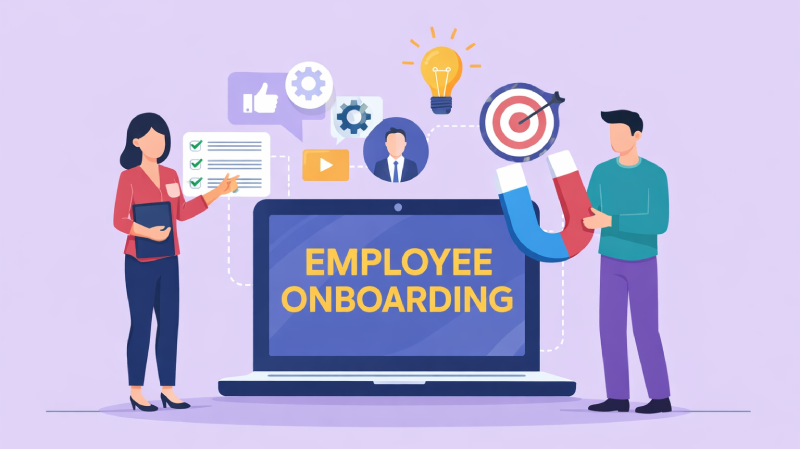
Without employee onboarding, companies lose 25 percent of all new employees within a year.
– Allied Workforce Mobility Survey (Source)
The first 90 days of employment often decide whether a new hire becomes a top performer or starts looking for a new job.
In 2026, employee onboarding is a strategic, business-critical process that affects employee engagement, retention, productivity, and long-term success. Employee onboarding should be seen as a comprehensive process that extends well beyond orientation and paperwork, encompassing workflow integration, company culture assimilation, and long-term productivity.
Organizations that treat onboarding as part of their talent strategy perform better than those that limit it to paperwork and policy briefings. Onboarding connects recruitment with long-term success.
Great onboarding depends on clear communication and digital tools, especially for remote or virtual teams. It builds trust and efficiency throughout the process.
Employees expect clarity from day one. They want information about their start date, meaningful early connections, and a supportive work environment. The employee's first day and the employee's first interactions with the company are crucial, as the first days and weeks shape their initial impressions and set the tone for their experience. Clear role responsibilities help new hires fit in smoothly.
HR leaders must manage hybrid work, distributed teams, global hiring, and pressure to prove ROI on people initiatives.
Onboarding can make or break a new hire’s relationship with the company. That’s why a strategic approach is essential. An effective onboarding program is vital to every company's success.
An effective onboarding process is not just a one-day administrative event. It should shift from a one-day event to a long-term strategic journey that supports employees beyond their first day, ensuring ongoing engagement and success.
This guide is for HR leaders, managers, and talent professionals who want to modernize their onboarding process. It helps build a modern, scalable onboarding framework that supports remote and hybrid employees and strengthens company culture from job offer to full integration.
What Is Employee Onboarding (And Why It Matters in 2026)
Onboarding is the process of integrating a new employee into a company and its culture. It is a comprehensive process that is a critical part of the hiring process, ensuring new hires are effectively brought into the organization.
The employee onboarding process is a structured, multi-phase journey. It takes new hires from offer acceptance through their first months—often lasting up to a year.
It goes beyond orientation and involves management and employees to make sure new hires are productive and aligned with company culture.
Onboarding helps new employees learn about their company, their co-workers, and their individual roles and responsibilities.
Besides paperwork like contracts, tax forms, and benefits, the process covers:
- Role clarity and expectations
- Understanding the employee’s position within the team and company
- Cultural integration and values alignment
- Building relationships with managers, peers, and stakeholders
- Performance expectations and feedback
- Career path visibility and growth opportunities
- Familiarization with company policies and how the company works
Onboarding new employees can last up to 12 months and involves management and other employees. The onboarding process can last between three to six months, and even extend up to the first 12 months of employment.
In hybrid and distributed environments, onboarding must provide a consistent experience no matter where the employee is located.
Effective onboarding reduces early turnover, speeds up time-to-productivity, and builds commitment. Poor onboarding causes confusion, disengagement, and turnover.
Onboarding bridges hiring and sustained performance. Onboarding should include a mix of administrative tasks and training to help new hires acclimate to their roles and the company culture.
The Business Case for Strategic Employee Onboarding
Early turnover is costly and avoidable. Nearly 90% of employees decide whether to stay within the first six months.
Replacing an employee can cost 50% to 200% of their salary. This includes recruiting, training, and lost productivity. The first 90 days are critical as new hires evaluate the organization. Giving support and development at the start reduces early turnover and sets the stage for long-term success.
A well-designed onboarding process improves:
- Retention rates in the first 90 days and first year
- Time-to-productivity
- Employee engagement and morale
- Manager effectiveness
- Employer brand and candidate perception
- Employee satisfaction through ongoing support
A poor onboarding process makes new hires twice as likely to look for a new job. Employees with great onboarding experiences are 2.6 times more likely to be happy with their jobs.
Supported, informed, and connected employees stay longer and perform better. Onboarding is where engagement begins and supports practical employee retention strategies. Failing here leads to reactive retention efforts.
In 2026, onboarding is a business performance lever.
The 5 C’s of Effective Employee Onboarding
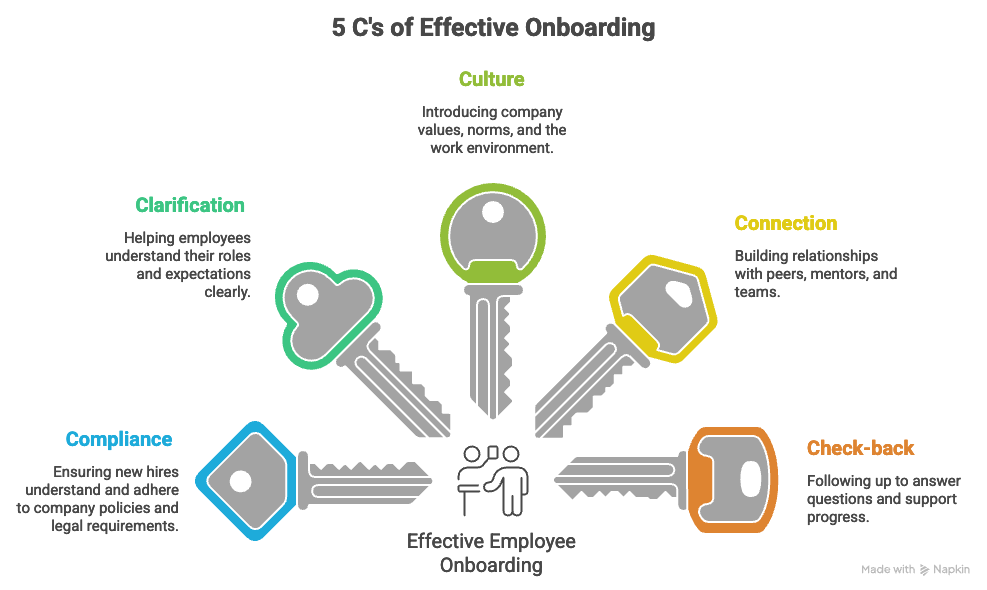
The 5 C’s model offers a framework to build or evaluate onboarding programs:
- Compliance: Teaching new hires the rules, company policies, and legal requirements.
- Clarification: Helping employees understand their roles and expectations.
- Culture: Introducing company values, norms, and the work environment.
- Connection: Building relationships with peers, mentors, and teams. Onboarding is a pivotal moment for community building and welcoming new people into the existing team.
- Check-back: Following up to answer questions and support progress.
Effective onboarding balances all five to ensure success and long-term integration.
1. Compliance
This includes legal and administrative tasks like background checks, paperwork, tax forms, tax documents, benefits enrollment, policies, and training. Completing paperwork before the employee’s first day using digital tools makes this easier. Compliance is necessary but not enough for engagement.
2. Clarification
Clear communication of role, responsibilities, expectations, and priorities. Aligning expectations early with 30-60-90 day goals reduces uncertainty and speeds up productivity.
3. Culture
Helping employees understand company values, communication norms, leadership expectations, and how the company works, and “how things really work,” especially for remote workers. Cultural immersion introduces company values and mission early in onboarding.
4. Connection
Building relationships with managers, peers, and stakeholders is vital. Equally important is bonding with co-workers, new colleagues, other employees, new team members, and other team members to encourage collaboration and a positive culture.
Assigning an onboarding buddy or mentor offers ongoing support. Having a go-to person gives new hires a reliable contact for questions. Team building fosters trust and belonging. Intentional employee engagement activities during onboarding welcome new people into the existing team and reinforce the new hire’s place.
5. Check-ins (Confidence)
Regular feedback and milestone conversations build confidence, uncover concerns, and support integration. Scheduled feedback loops during these check-ins monitor progress and improve the onboarding experience.
These review meetings should specifically assess the employee's onboarding experience, focusing on their integration, role clarity, and overall satisfaction, and use the insights to make continuous improvements.
Effective onboarding balances all five elements.
Pre-Onboarding Preparation
Organizations with effective pre-onboarding see 69% higher new hire retention rates. But what if most companies are missing the boat entirely on this critical first impression? What if the difference between a new hire who thrives and one who quietly quits within months comes down to those crucial days before they even walk through your door?
Imagine this: your new hire has just accepted the job offer, and the excitement is palpable. But instead of being left in the dark, they receive a warm, personalized welcome package that feels less like a stack of paperwork and more like an invitation to join a vibrant story-the story of your company. This package outlines what their first days and weeks will look like, giving them a clear roadmap and a sense of belonging before they even step through the door.
Now, picture all that tedious paperwork-employment contracts, tax forms, benefits enrollment-taken care of before day one.
This means your new hire can focus on what truly matters from the start: connecting with the people who will shape their experience.
Early email introductions, casual virtual coffee chats, or even a relaxed pre-start social event help new employees get to know their future teammates and understand team dynamics without feeling overwhelmed.
These early connections aren’t just friendly gestures—they’re the foundation of your new hire’s success and retention. When new employees feel connected and supported right away, they’re far more likely to stay and thrive.
But here’s the secret sauce: it’s not just about leading; it’s about listening. By asking your new hires what they expect, what concerns they have, and what questions are on their minds, you tailor the onboarding experience to their unique needs.
This personalized approach makes them feel truly valued and supported; turning a simple onboarding process into the start of a lasting, rewarding journey with your company.
The Employee Onboarding Journey: A High-Level View
Employee onboarding is a comprehensive process that extends beyond simple orientation, encompassing workflow integration, company culture assimilation, and long-term productivity. Implementing an effective onboarding process is crucial, as it significantly improves employee retention, engagement, and performance during the initial months of employment.
Onboarding starts before the employee’s first day, focusing on completing administrative tasks for a smooth start.
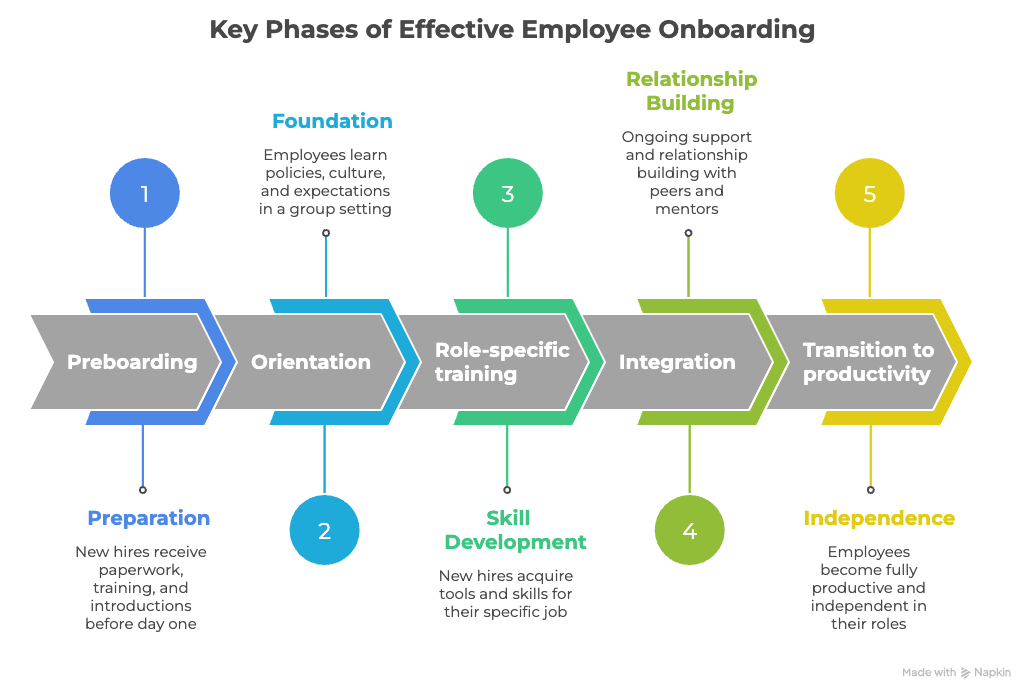
Most onboarding programs follow these phases:
1. Preboarding: Before day one, onboarding helps new hires get ready by providing paperwork, training, information, and introductions.
2. Orientation: Learning policies, culture, and expectations.
3. Role-specific training: Equipping employees with tools and skills for their job.
4. Integration: Ongoing support and relationship building.
5. Transition to productivity: Employees become fully productive and independent.
Key strategies for onboarding include setting up IT/workstations beforehand, sending welcome kits, and using automated onboarding portals.
Structured onboarding speeds up productivity and return on investment.
1. Preboarding (Offer Acceptance → Day 0)
Preboarding lowers anxiety and prepares new hires with paperwork and early engagement, often using digital tools. Preparing for employee starts and hires start by focusing on preboarding activities—such as processing documents and providing onboarding resources before the employee's first day—ensures a smooth transition and immediate engagement.
It can start months or days before the employee begins, offering chances for meet-and-greets and information sharing. Strong onboarding combines organization and technology to quickly complete administrative tasks and ensure a smooth transition.
2. Orientation ( The First Day)
Focus on orientation, introductions, and role clarity. The employee's first day is crucial—preparations and a welcoming environment are essential to ensure a smooth transition and set a positive tone.
Making the first day smooth and welcoming helps new hires transition successfully. The first week often centers on orientation, where new hires meet managers and complete paperwork.
3. Role-specific training (The First Week)
Foundational training, relationship building, and early tasks. The first week is key for setting the experience’s tone. Assigning manageable, action-oriented tasks helps build confidence.
4. Integration (The First 30–90 Days)
Shift to ownership, responsibility, and feedback. Supporting new hires during the initial months of onboarding is crucial. Frequent check-ins help address concerns and track progress.
Regular check-ins with new hires should occur throughout the onboarding process, especially during the first month and first three months, to ensure they feel supported and integrated.
5. Transition to productivity ( Day 90 to Year One)
Deeper integration and long-term development.
A strategic onboarding process lasting at least one year helps new hires stay and thrive. An effective onboarding process should last weeks or months to ensure long-term integration.
Clear ownership, outcomes, and success measures are essential.
Employee Handbook and Resources
A thorough, accessible, and regularly updated employee handbook is vital. Using an onboarding checklist with key events helps ensure effective onboarding while supporting diversity and inclusion.
It guides new hires through policies, procedures, and workplace expectations, supporting consistent onboarding and cultural alignment.
Essential Best Practices for Modern Onboarding
Great onboarding has evolved from a single-day orientation into a comprehensive 90-day experience that prioritizes belonging and purpose over mere company facts. This transformation represents a fundamental shift from compliance-heavy paperwork toward personalized, culture-first journeys, moving away from "one-size-fits-all" models to ensure the process is tailored to the individual. Ultimately, this modern approach moves beyond teaching new hires how to merely "survive" the first few weeks; instead, it focuses on empowering them to thrive, contribute, and establish deep connections with the organization starting from day zero.
~ Aakash Thakur, Global Leadership, Talent, and HR Transformation Advisor (Listen to the podcast)
New employee onboarding is a comprehensive, strategic process managed by HR to ensure new hires are fully integrated and ready.
Effective onboarding in 2026 includes:
- Structured 30-60-90 day plans
- Role-specific learning paths
- Manager accountability
- Buddy or mentorship programs
- Mentoring programs that provide new hires with a go-to person for questions and support
- Centralized checklists and resources
- Regular feedback collection
- Alignment with performance management
A successful onboarding program speeds up new hire productivity and boosts retention by combining structured training and social connections. This helps develop top employees.
Technology simplifies administrative tasks and tracks progress. Managers deliver the onboarding experience, driving engagement and retention. A well-structured employee onboarding process is key to developing and keeping the best employees.
Effective Employee Onboarding Strategies
Companies with strong onboarding improve new hire retention by 82%. But many miss the bigger picture when welcoming new talent.
What if onboarding isn’t just paperwork and orientation videos, but one of your most strategic investments in long-term success?
Effective employee onboarding strategies don’t just welcome new hires—they affect day-one productivity and whether that person stays with you next year.
Many treat onboarding like a checklist instead of a culture-building, retention-boosting powerhouse.
1. Personalize the Onboarding Experience
- Personalization is essential.
- Tailor onboarding to each employee’s position, background, and learning style, ensuring that activities and integration efforts help clarify the employee's position within the team and company.
- Use personalized welcome messages, role-specific schedules, and customized training.
- This creates a genuine sense of belonging from day one.
2. Foster Early Connections
- Encourage new hires to build relationships with team members and colleagues.
- Organize team introductions, assign onboarding buddies, and host informal meet-and-greets.
- Early connections help new hires fit in, understand team dynamics, and feel comfortable asking for help.
3. Communicate Company Culture and Values
- Embed company culture into every onboarding stage.
- Share stories, hold culture workshops, and involve seasoned employees in orientation.
- Show how values are lived daily to increase engagement and job satisfaction.
4. Set Clear Expectations and Milestones
- Give new hires a detailed onboarding checklist with key tasks, training sessions, and milestones.
- Clearly communicate job responsibilities and workplace expectations.
- Empower employees to take ownership of their roles.
5. Offer Ongoing Support and Feedback
- Set up regular check-ins between new hires and managers or HR.
- Use these meetings for timely feedback and to address concerns.
- Continuous support keeps employees engaged and confident as they settle in.
6. Encourage Two-Way Feedback
- Invite new hires to share their onboarding experience and suggestions.
- Gathering feedback improves your onboarding and shows new hires their opinions matter.
- This boosts satisfaction and engagement beyond the first weeks.
By applying these strategies, organizations create a welcoming, supportive environment where new hires thrive. Thoughtful onboarding speeds integration and productivity, strengthens retention, and builds a foundation for long-term success.
Onboarding Technology and Tools
58% of companies focus onboarding almost entirely on paperwork instead of meaningful integration. (HRcould)
Modern onboarding software automates paperwork, benefits enrollment, and compliance, freeing HR to provide personalized support.
Video conferencing enables remote training and team connections.
Centralized platforms offer easy access to documents and resources, reducing confusion and speeding productivity.
Investing in onboarding technology improves job satisfaction and retention.
Remote and Hybrid Onboarding in 2026
Onboarding must support in-office, hybrid, and remote employees equally.
Remote onboarding requires intentional design:
- Clear documentation and communication norms
- Structured virtual introductions
- Deliberate relationship-building
- Technology-enabled tracking and automation
Remote employees benefit from written resources, asynchronous learning, and scheduled touchpoints to avoid isolation.
Designing for remote employees improves onboarding for everyone.
Connecting Onboarding to Engagement and Retention
Onboarding shapes how employees view leadership, values, and credibility.
Alignment with hiring promises builds trust; misalignment causes disengagement.
Strong onboarding supports engagement, recognition, learning, career growth, and retention.
Employees who feel valued early stay longer and contribute more.
Creating a Positive Employee Experience
Organizations with strong onboarding improve new hire retention by 82%. But the secret to great employee experience isn’t just training manuals or checklists. The moment new employees accept their offer is the most critical chance to shape their journey.
A positive experience starts at acceptance. The onboarding program should make them feel welcomed, valued, and supported. This first impression sets the tone for their time with the company and impacts retention and job satisfaction.
Employees with structured onboarding are 58% more likely to stay after three years. Structured onboarding means going beyond paperwork to create an environment where new hires feel comfortable asking questions, connecting with colleagues, and understanding their role. Regular check-ins, comprehensive training, and clear communication help new employees navigate their roles confidently. These touchpoints make employees feel seen and heard, fostering belonging from day one.
Companies with great onboarding see 70% higher new hire productivity. Positive onboarding experiences lead to engaged, motivated employees who help the workplace thrive.
This boosts satisfaction, job performance, and the company’s reputation. Investing in thoughtful onboarding pays dividends in experience, retention, and success.
New Employee Integration
Successful integration helps new hires quickly feel part of the team. But integration isn’t just ticking boxes. How you approach the first weeks determines whether new hires become long-term champions or quietly leave.
A comprehensive onboarding program uses intentional strategies to help new employees adjust and connect with culture.
Team-Building Activities
Integration starts by clarifying job responsibilities and introducing key team members. Team-building speeds relationship-building and helps new hires feel comfortable.
Mentoring Programs
Mentoring and social events help new hires connect with colleagues and learn from experienced employees, building belonging and support.
Feedback Opportunities
Encourage open communication and feedback so new hires can share their views and help improve onboarding. Without two-way dialogue, even good programs can miss the mark.
Prioritizing integration fosters engagement and a supportive atmosphere where new hires thrive. This reduces turnover and creates a positive workplace where employees do their best and build lasting connections. Investing in integration isn’t optional—it’s essential.
Onboarding and Company Culture Alignment
Companies with strong onboarding improve retention by 82% and productivity by over 70%. But culture alignment isn’t a nice extra—it’s the key to whether new hires truly connect or just go through the motions.
Your onboarding should do more than cover policies—it should immerse new employees in values, mission, and expectations. Help them see how their role contributes to business goals and why they matter.
Many fall short by only offering training on policies and norms. The magic happens when new hires interact with seasoned employees who live the culture and demonstrate how the company works.
These moments reveal how the company really works, not just what it says. They reinforce behaviors and attitudes that define your culture, creating authentic connections no handbook can match.
When new hires experience strong culture alignment, they don’t just show up—they feel belonging and commitment. This leads to higher satisfaction, less turnover, and a more engaged workforce that cares about your success.
Embedding culture into onboarding creates an inclusive environment supporting individual and organizational growth. In today’s talent market, this isn’t just smart—it’s survival.
Overcoming Onboarding Challenges
Effective onboarding boosts retention by 58% over three years.You need to do these steps to avoid any pitfall in the onboarding processes.
- Deploy a Mentoring and buddy systems that provide vital human connection.
- Encourage Consistent communication and regular check-ins to catch issues early and improve satisfaction.
- Tailored onboarding to each new hire’s role and learning style which increases productivity and retention.
- Continuous feedback allows data-driven improvements.
Measuring the Success of Employee Onboarding
Measure onboarding success with:
- 90-day retention
- Time-to-productivity
- New hire satisfaction
- Manager readiness
- Training completion
Collect feedback to identify gaps and improve future onboarding.
Data turns onboarding into a strategic strength.
Advanced Onboarding Principles
Comprehensive onboarding programs improve retention by 50%.
- Ongoing training, recognition, and well-designed employee reward programs support continuous growth.
- Regular check-ins ensure progress and culture fit.
Companies investing in advanced onboarding see 82% better retention and 70% higher productivity.
Practical Next Steps for HR Leaders
In the next 60–90 days:
- Map your onboarding journey.
- Identify gaps and assign ownership.
- Standardize core experiences.
- Implement an onboarding checklist.
- Track progress for hires and HR.
- Train managers on onboarding.
- Set measurable onboarding goals.
Onboarding affects engagement, performance, and retention, delivering long-term returns.
Final Thought
Top talent decides quickly if your offer was right.
Strategic onboarding confirms that decision.
Done well, onboarding builds clarity, confidence, and connection—creating an engaged, productive workforce ready for success.

This article is written by Vantage Circle Content Team. The Vantage Circle Content Team brings practical insights from working with HR leaders globally, covering employee engagement, recognition, workplace culture, and performance management.